• About
  • Contact
  • Privacy & Policy
Friday, August 21, 2026
EVStory
  • STORIES
    • LCV’S
    • HCV’S
    • SCV’S
    • BIKES
    • CARS
    • BUSES
    • BATTERIES
    • EV CHARGING
    • EV FINANCING
    • EV COMPONENTS
  • FEATURES
    • TECHNOLOGY
    • MARKETS
    • GOVERNMENT
    • EV SAFETY
  • REVIEWS
    • BUSES
    • CARS
    • 3 WHEELERS
    • BIKES
    • TRUCKS
    • INTERVIEWS
  • RESOURCES
    • MARKETPLACE
    • POLICIES
    • REPORTS & JOURNALS
    • VIDEOS
    • EVSTORY FLIPBOOK
  • EV PEOPLE
    • NEWSMAKERS
    • EV PANACHE
    • EV MENTORS
    • EV OPINIONS
  • ABOUT
    • ABOUT US
    • VISION
    • OUR TEAM
    • JOIN US
  • CONTACT US
No Result
View All Result
  • STORIES
    • LCV’S
    • HCV’S
    • SCV’S
    • BIKES
    • CARS
    • BUSES
    • BATTERIES
    • EV CHARGING
    • EV FINANCING
    • EV COMPONENTS
  • FEATURES
    • TECHNOLOGY
    • MARKETS
    • GOVERNMENT
    • EV SAFETY
  • REVIEWS
    • BUSES
    • CARS
    • 3 WHEELERS
    • BIKES
    • TRUCKS
    • INTERVIEWS
  • RESOURCES
    • MARKETPLACE
    • POLICIES
    • REPORTS & JOURNALS
    • VIDEOS
    • EVSTORY FLIPBOOK
  • EV PEOPLE
    • NEWSMAKERS
    • EV PANACHE
    • EV MENTORS
    • EV OPINIONS
  • ABOUT
    • ABOUT US
    • VISION
    • OUR TEAM
    • JOIN US
  • CONTACT US
No Result
View All Result
EVStory
No Result
View All Result
Home REVIEWS BIKES

EV Fires increasing: A Strict Battery Safety Policy needed

evstory by evstory
June 30, 2022
in BIKES, BIKES, BUSES, BUSES, CARS, CARS, EV SAFETY, FEATURES, GOVERNMENT, HCV'S, LCV'S, NEWSMAKERS, SCV'S, STORIES, TECHNOLOGY, TRUCKS
Reading Time: 6 mins read
0
OSM to invest 150 crores for Fast Charging by FY24
0
SHARES
19
VIEWS
Share on FacebookShare on Twitter
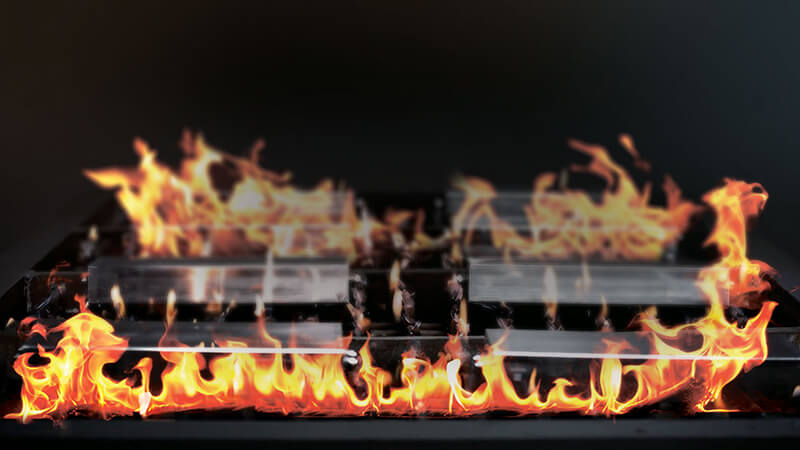
Lithium battery fire

• It has been demonstrated that vehicle electrification reduces greenhouse gas emissions and operates more efficiently than conventional internal combustion engine (ICE) vehicles.

• Even the most technologically advanced ICE vehicles have an efficiency of less than 50%, but an EV has an efficiency of approximately 90%.

• Although EV manufacturers are not required to follow these requirements, only stricter application of battery safety policies and standards would lower the rising incidence of EV fires.

The global demand for electric cars (EVs) continues to increase each year. This is largely attributable to air quality and environmental legislation, as well as increased consumer demand and more affordable energy options. In addition, the increasing popularity of electric vehicles can be ascribed to major advances in EV and lithium-ion battery technology.

It has been established that vehicle electrification reduces greenhouse gas emissions and operates more effectively than conventional internal combustion engine (ICE) vehicles. Conventional powertrains and internal combustion engines (ICE) as power sources pose the greatest challenge. Even the most technologically advanced ICE vehicles have an efficiency of less than 50%, but an EV has an efficiency of over 85%.

However, as more EVs become operational worldwide, the likelihood of fire mishaps is anticipated to increase. This can cause damage to lithium-ion batteries, posing a threat to the business and people involved in post-crash efforts.

Each lithium-ion battery type has its own unique form factor, cell chemistry, and integration into electric vehicles. There are lithium-ion batteries with a swappable mechanism and a handful that function on a charge-and-drive basis, for example. To securely use lithium-ion batteries, it is crucial to maintain the cells within a specific voltage and temperature range. These restrictions may be exceeded in the event of an accident or a vehicle or battery pack malfunction.

In recent months, a number of fires involving electric two-wheelers have raised questions about the regulation and safety requirements of this fast-expanding area of the vehicle industry. Given the numerous incidents involving electric two-wheelers, it is anticipated that the Indian government will shortly release EV battery guidelines. The comprehensive strategy will include testing for performance and production standards, as well as the heat resistance of these batteries.

The Centre for Fire, Explosive and Environment Safety (CFEES), a laboratory of the Defence Research and Development Organization (DRDO), has been charged with researching the fire occurrences linked with these EVs.

Batteries are the most expensive, the largest, and the most vital part of an electric vehicle. The environment and driving conditions in India are tough, thus it is essential to maintain the battery and its charging requirements. Also capable of causing thermal runaway are faults and/or impurities in the assembling process. When a battery cell short circuits and begins to overheat, thermal runaway develops.

Aside from this, the selection of high-grade cells and the design of a battery pack with the most effective thermal management systems and an intelligent battery management system (BMS) also play a crucial role in enhancing the battery safety criteria.

The Bureau of Indian Standards (BIS) has standardised the performance specifications for lithium-ion batteries used in electric vehicles. Additionally, two new battery safety standards are being developed.

IS 17855:2022 is the name of this new BIS standard, which has been produced in compliance with ISO 12404-4:2018. They were created with real-world EV scenarios in mind, such as a car parked, a battery system being transported, battery operating at low and high temperatures, etc.

While it is not essential for EV manufacturers to embrace these requirements, we believe that only greater adoption of modern battery safety laws and standards would lower the escalating number of EV fires and help the EV market flourish in the long run.
Battery Safety Regulations Currently in Effect

Recent fire incidents involving electric vehicles have prompted worries about numerous areas of the manufacturing process for electric two-wheelers in the country. Regardless of whether the battery pack is locally produced, built, or imported, all units are subject to India’s Automotive Industry Standards (AIS) as established by the Automotive Research Association of India (ARAI). In India, the following regulatory criteria for battery safety under AIS are now in effect:

  • AIS 038 REV 1 (2015): Vehicle Security

This standard addresses the functional safety of cars with electric powertrains. The tests cover, among others, protection from electric shock, direct/indirect touch, and water impacts.

•            AIS 048 (2009): Safety of Batteries

These standard addresses safety criteria for batteries. It primarily addresses the following two types of testing:

o Electrical Abuse Test (done at the level of the cell): Short circuit and overcharge tests

o Mechanical Abuse Test (at the module or pack level): Vibration, mechanical shock, and rollover tests

Under AIS 048, a nail penetration test is also performed at the cell level.

This standard (AIS 048) will be phased down beginning in December 2022, according to recent Ministry of Road Transport and Highways (MoRTH) directives. The AIS 156 and AIS 038 Rev 2 standards will become mandatory on December 27, 2022, as declared by the Ministry of Road Transport and Highways (MoRTH) on December 27, 2021.

• AIS 038 Rev 2 (2020): Safety of Batteries and Vehicles (For Electric Cars, Buses & Trucks)

These standard tackles a system-level safety strategy that treats the battery and vehicle as a unit. AIS 038 Rev 2 is designed per GTR 20 Phase 1 (UNR100 Rev3).

• AIS 156 (2020): Safety of Batteries and Vehicles (For Electric 2-Wheeler, 3-Wheeler & Ecycles)

These standard tackles a system-level safety strategy that treats the battery and vehicle as a unit. AIS 156 is manufactured in accordance with UN R136.

Are These Tests Adequate?

Similar to the internationally approved UN-certified R136 standard, the AIS-156 standard lays a heavy emphasis on testing, shock protection measures, and how a normal battery performs while overcharged and depleted.

Regarding standards, they appear to be quite inclusive. However, just one battery pack is tested. In addition, the tests do not account for the performance of a battery and its management systems over time. To achieve this, Original Equipment Manufacturers (OEMs) must implement a system that surpasses the stringency and rigour of these tests in every way and for all manufactured battery packs.

The Bureau of Indian Standards (BIS) has standardised the performance specifications for lithium-ion batteries used in electric vehicles. Additionally, two new battery safety standards are being developed.

IS 17855:2022 is the name of this new BIS standard, which has been produced in compliance with ISO 12404-4:2018. They were created with real-world EV scenarios in mind, such as a car parked, a battery system being transported, a battery operating at low and high temperatures, etc.

While it is not essential for EV manufacturers to embrace these requirements, we believe that only greater adoption of modern battery safety laws and standards would lower the escalating number of EV fires and help the EV market flourish in the long run.
Author

  • evstory
    evstory

    EVStory team is group of well seasoned journalists from the e-mobility segment with rich experience in the auto industry.

    View all posts
Previous Post

Supporting the worldwide transition to electric transportation

Next Post

Honda calls for decreasing taxes on Hybrid vehicles

evstory

evstory

EVStory team is group of well seasoned journalists from the e-mobility segment with rich experience in the auto industry.

Related Posts

ChargeZone, Fresh Bus Partner to Add 400 Electric Buses to Intercity Fleet
BUSES

ChargeZone, Fresh Bus Partner to Add 400 Electric Buses to Intercity Fleet

August 18, 2026
EV Charging Gets Simpler as Pulse Energy Integrates with BHIM UPI
EV CHARGING

EV Charging Gets Simpler as Pulse Energy Integrates with BHIM UPI

August 18, 2026
Toyota Urban Cruiser Hyryder Gets a Bold New Aero Black Edition
FEATURES

Toyota Urban Cruiser Hyryder Gets a Bold New Aero Black Edition

August 18, 2026
ChargeZone and Landmark Cars Partner to Enhance EV Ownership with Exclusive Charging Benefits
EV CHARGING

ChargeZone and Landmark Cars Partner to Enhance EV Ownership with Exclusive Charging Benefits

August 18, 2026
BorgWarner Wins Global OEM Program for Next-Generation Integrated Drive Module
INNOVATION

BorgWarner Wins Global OEM Program for Next-Generation Integrated Drive Module

August 7, 2026
Greaves Electric Mobility Raises INR 530 Crore Through Fully Subscribed Rights Issue
3 Wheelers

Greaves Electric Mobility Raises INR 530 Crore Through Fully Subscribed Rights Issue

August 3, 2026
Next Post

Honda calls for decreasing taxes on Hybrid vehicles

Leave a Reply Cancel reply

Your email address will not be published. Required fields are marked *

  • Trending
  • Comments
  • Latest
Maharashtra 2025  EV Policy offers  Subsidy Bonanza for all vehicle categories

Maharashtra 2025 EV Policy offers Subsidy Bonanza for all vehicle categories

May 24, 2025
Kia Syros EV Debuts with 526 km Range, Lifetime Battery Warranty and EV-First Ownership

Kia Syros EV Debuts with 526 km Range, Lifetime Battery Warranty and EV-First Ownership

July 19, 2026
Tata Motors 10 new EVs by 2027

Tata Motors 10 new EVs by 2027

August 14, 2022
As Tata Harrier EV Nears 25,000 Milestone Amid Rival Surge

Tata’s Harrier EV braces up to touching 25,000 Sales by March 26

January 6, 2026
GST 2.0 Gives India’s EV Industry a Sigh of Relief, Hybrids Left Waiting

GST 2.0 Gives India’s EV Industry a Sigh of Relief, Hybrids Left Waiting

2
Olectra’s 10,022 order book  gets halved as Maha Govt terminates 5150 e-bus contract

Olectra’s 10,022 order book gets halved as Maha Govt terminates 5150 e-bus contract

1
Maharashtra Government reinstates Olectra’s axed contract for 5150 E-Buses

Maharashtra Government reinstates Olectra’s axed contract for 5150 E-Buses

1
JBM Powers Delhi’s Green Push; CM Rekha Gupta Flags Off 100 New DEVi Electric Buses

Why Mercedes India’s Bossman Santosh Iyer loves Bengaluru’s Benne Dosas, Filter Coffee & Startup Hustle

1
ChargeZone, Fresh Bus Partner to Add 400 Electric Buses to Intercity Fleet

ChargeZone, Fresh Bus Partner to Add 400 Electric Buses to Intercity Fleet

August 18, 2026
EV Charging Gets Simpler as Pulse Energy Integrates with BHIM UPI

EV Charging Gets Simpler as Pulse Energy Integrates with BHIM UPI

August 18, 2026
Toyota Urban Cruiser Hyryder Gets a Bold New Aero Black Edition

Toyota Urban Cruiser Hyryder Gets a Bold New Aero Black Edition

August 18, 2026
ChargeZone and Landmark Cars Partner to Enhance EV Ownership with Exclusive Charging Benefits

ChargeZone and Landmark Cars Partner to Enhance EV Ownership with Exclusive Charging Benefits

August 18, 2026

Recent News

ChargeZone, Fresh Bus Partner to Add 400 Electric Buses to Intercity Fleet

ChargeZone, Fresh Bus Partner to Add 400 Electric Buses to Intercity Fleet

August 18, 2026
EV Charging Gets Simpler as Pulse Energy Integrates with BHIM UPI

EV Charging Gets Simpler as Pulse Energy Integrates with BHIM UPI

August 18, 2026
Toyota Urban Cruiser Hyryder Gets a Bold New Aero Black Edition

Toyota Urban Cruiser Hyryder Gets a Bold New Aero Black Edition

August 18, 2026
ChargeZone and Landmark Cars Partner to Enhance EV Ownership with Exclusive Charging Benefits

ChargeZone and Landmark Cars Partner to Enhance EV Ownership with Exclusive Charging Benefits

August 18, 2026
Linkedin X-twitter Youtube Facebook Instagram

Stories      Features      Reviews      Resources

Copyright 2022 EVStory LLP. All rights reserved. 

Privacy    Terms   About    Contact

We use cookies on our website to give you the most relevant experience by remembering your preferences and repeat visits. By clicking “Accept”, you consent to the use of ALL the cookies.
Do not sell my personal information.
Cookie SettingsAccept
Manage consent

Privacy Overview

This website uses cookies to improve your experience while you navigate through the website. Out of these, the cookies that are categorized as necessary are stored on your browser as they are essential for the working of basic functionalities of the website. We also use third-party cookies that help us analyze and understand how you use this website. These cookies will be stored in your browser only with your consent. You also have the option to opt-out of these cookies. But opting out of some of these cookies may affect your browsing experience.
Necessary
Always Enabled
Necessary cookies are absolutely essential for the website to function properly. These cookies ensure basic functionalities and security features of the website, anonymously.
CookieDurationDescription
cookielawinfo-checkbox-analytics11 monthsThis cookie is set by GDPR Cookie Consent plugin. The cookie is used to store the user consent for the cookies in the category "Analytics".
cookielawinfo-checkbox-functional11 monthsThe cookie is set by GDPR cookie consent to record the user consent for the cookies in the category "Functional".
cookielawinfo-checkbox-necessary11 monthsThis cookie is set by GDPR Cookie Consent plugin. The cookies is used to store the user consent for the cookies in the category "Necessary".
cookielawinfo-checkbox-others11 monthsThis cookie is set by GDPR Cookie Consent plugin. The cookie is used to store the user consent for the cookies in the category "Other.
cookielawinfo-checkbox-performance11 monthsThis cookie is set by GDPR Cookie Consent plugin. The cookie is used to store the user consent for the cookies in the category "Performance".
viewed_cookie_policy11 monthsThe cookie is set by the GDPR Cookie Consent plugin and is used to store whether or not user has consented to the use of cookies. It does not store any personal data.
Functional
Functional cookies help to perform certain functionalities like sharing the content of the website on social media platforms, collect feedbacks, and other third-party features.
Performance
Performance cookies are used to understand and analyze the key performance indexes of the website which helps in delivering a better user experience for the visitors.
Analytics
Analytical cookies are used to understand how visitors interact with the website. These cookies help provide information on metrics the number of visitors, bounce rate, traffic source, etc.
Advertisement
Advertisement cookies are used to provide visitors with relevant ads and marketing campaigns. These cookies track visitors across websites and collect information to provide customized ads.
Others
Other uncategorized cookies are those that are being analyzed and have not been classified into a category as yet.
SAVE & ACCEPT
No Result
View All Result
  • STORIES
    • LCV’S
    • HCV’S
    • SCV’S
    • BIKES
    • CARS
    • BUSES
    • Batteries
    • EV CHARGING
    • EV FINANCING
    • EV COMPONENTS
  • FEATURES
    • TECHNOLOGY
    • MARKETS
    • GOVERNMENT
    • EV SAFETY
  • REVIEWS
    • BUSES
    • CARS
    • 3 WHEELERS
    • BIKES
    • TRUCKS
    • INTERVIEWS
  • RESOURCES
    • MARKETPLACE
  • EV PEOPLE
    • NEWSMAKERS
    • EV PANACHE
    • EV MENTORS
    • EV OPINIONS
  • ABOUT
    • ABOUT
    • VISION
    • OUR TEAM
    • JOIN US

This website uses cookies. By continuing to use this website you are giving consent to cookies being used. Visit our Privacy and Cookie Policy.