

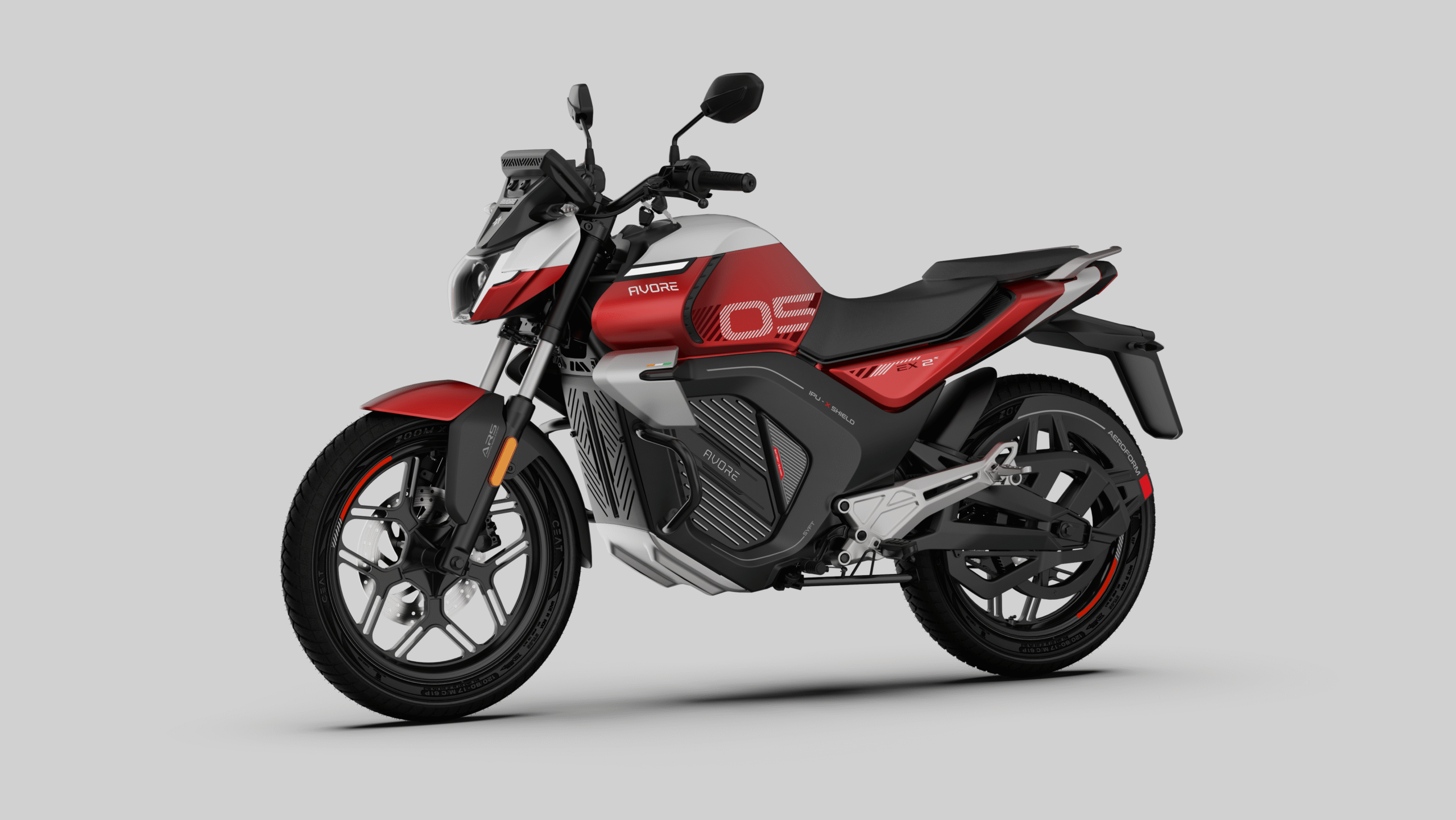
Ahmedabad, November 25, 2026: Avore Electric, the electric motorcycle brand from Samarth E-Mobility, now sources 90% of its components from within India. The company says this cuts its reliance on imports and gives it tighter control over quality. It also concedes the approach has come at a cost to delivery timelines.
The localisation rests on Avore building many of the bike’s critical systems itself. The company makes its motor controller, digital instrument display, battery packs and a rare-earth-free motor in-house, along with its signature tank lights and position lamps. Owning these systems lets Avore control how each part is developed, tested and fitted into the motorcycle, instead of depending on imported sub-assemblies.

Bringing MSME suppliers up to automotive grade
For the parts it buys in, Avore has worked closely with MSME vendors, mainly in Gujarat and also elsewhere in India. Many already had the right machinery and production capacity. The harder part was meeting the precision, consistency and process control that automotive-grade components require.
To close that gap, Avore placed its own engineering and quality teams inside vendor facilities to rework manufacturing processes. It also brought in two standard automotive quality frameworks: Advanced Product Quality Planning (APQP) and the Production Part Approval Process (PPAP). Under these, every component has its design, engineering and tolerances checked before it goes into mass production.
Quality systems on the factory floor
Avore’s own plant follows quality practices aligned with IATF 16949 and ISO 9001:
- Failure Mode and Effects Analysis (FMEA) during product design, to find likely failure points before production
- Statistical Process Control (SPC) to track variation on the line
- Poka-yoke (mistake-proofing) systems to stop assembly errors as they happen
The company also tracks every component, sub-assembly and software version from start to finish. The record runs from raw-material sourcing through production to after-sales service.
“We would rather delay deliveries” Priyank Rakholiya, Co-founder of Samarth E-Mobility, linked the sourcing strategy directly to the slower rollout.
“At Avore Electric, our commitment to customer-centric innovation, advanced technology, and global quality and safety benchmarks is reflected in our local sourcing strategy,” he said. “Our first principles methodology of building a supply chain that meets these standards across Gujarat and other parts of India has required significant collaboration with our vendor partners and may have extended our rollout timelines since our August 2026 launch. However, this disciplined approach ensures complete oversight and confidence in every component we source. For us, quality is non-negotiable, and we would rather delay deliveries than bring a product to market that falls short of our standards.”
In-house testing
Avore runs its own testing on its two most critical systems. The battery line uses automated cell grading and sorting, laser marking, wire bonding, and charge-discharge cycle testing. On the motor line, each unit goes through controlled thermal processes and precision bearing assembly, then dynamometer testing before it is fitted to a motorcycle.
The bigger picture
Many Indian EV makers still rely on imported cells, controllers and magnet-based motors. Avore’s model of building parts in-house, sourcing the rest locally and training its suppliers is a bet that more control over the supply chain will pay off over time. The company presents it as a contribution to India’s own EV manufacturing ecosystem. Whether that bet pays off will depend on how quickly Avore can turn its quality controls into steady delivery volumes.