



NEW DELHI, September 4, 2025:India’s electric vehicle (EV) industry is breathing a sigh of relief after the GST Council opted against raising taxes on luxury EVs, maintaining the 5% tax rate across the segment. This significant reform simplifies the tax structure by collapsing four slabs into two tiers: 5% and 18%, with a 40% levy on ‘sin’ and luxury goods.

The Council’s decision is being praised as a pragmatic approach that balances India’s commitment to EVs with the need for affordability in the mass market. “This is a decisive moment,” said Ravi Bhatia, President of JATO Dynamics India. “The Council has clearly laid out a strategy for mass affordability. While compact internal combustion engine (ICE) cars and hybrids benefit, premium hybrids are purposely kept expensive. EVs remain the most favoured technology, backed by the strongest fiscal incentives.”
 Dr Anish Shah, Group CEO and Managing Director of Mahindra Group, one of India’s largest automakers with a strong presence in both ICE and EVs, described the reforms as transformative. He stated, “The next-generation GST reforms announced today represent a defining moment in India’s journey toward establishing a simpler, fairer, and more inclusive tax system. At Mahindra, we see these reforms as transformative. They simplify compliance, broaden affordability, and stimulate consumption while enabling the industry to invest with more confidence.”
For Mahindra, which is expanding its EV lineup with the upcoming Born Electric range while also leading in SUVs and tractors, the reforms align short-term goals of affordability with long-term electrification ambitions. Shah emphasised that the GST overhaul is not only a boost for the auto sector but also a cornerstone of India’s “Viksit Bharat @2047” economic roadmap.
Passenger Cars: Compact Wins, Premium Hybrids Left Out
In the passenger car segment, the most significant benefits are in the small vehicle category. Petrol cars with engines of up to 1,200 cc and diesel cars with engines of up to 1,500 cc, both measuring under 4 metres in length, will see notable tax advantages. Compact hybrids in the same category now enjoy tax parity with their ICE counterparts, a longstanding demand from automakers.
“The relief is targeted,” Bhatia noted. “It narrows the gap between EVs and hybrids in the mass market while ensuring that EVs maintain a clear advantage. The message is affordability first, electrification second, and premium hybrids last.”
The outcome for automakers is mixed. Maruti Suzuki India Ltd, which is preparing hybrid versions of its bestselling compact cars, stands to benefit the most. However, Toyota Kirloskar Motor and Honda Cars India, which have hybrid portfolios primarily in the mid-size and premium segments, will continue to face challenges due to the 40% tax.

Santosh Iyer, Managing Director and CEO of Mercedes-Benz India, called the government’s decision a major relief. “The government listened to the automotive industry’s long-standing wish list of rationalising GST rates. This GST revision is a step in the right direction, is progressive, and will induce the much-needed impetus by boosting consumption and bringing momentum to the automotive industry, which essentially remains the pulse of the Indian economy. We are thankful to the government for keeping the GST rate for BEVs unchanged, ensuring a faster transition to a decarbonised future.”
Rajesh Jejurikar, ED & CEO of the Auto and Farm Sector, M&M, also added to state that “We applaud the Government for this landmark GST rationalisation, which will have a far-reaching positive impact across the automotive and farming sectors.

The move makes tractors and farm machinery more affordable for farmers, reduces costs for commercial vehicles, and improves accessibility for personal mobility through the rationalisation of rates across all SUVs. Together, these measures are expected to stimulate demand and drive inclusive growth across the entire ecosystem.
We also appreciate the continuation of the 5% GST rate on EVs, which is a critical enabler of India’s clean mobility vision. This measure will further accelerate the adoption of electric vehicles and reinforce India’s leadership in sustainable, green transportation,” he indicated.
Industry executives emphasise the significance of this decision, as earlier discussions had suggested increasing GST on luxury EVs to offset revenue losses from tax cuts on essentials.
Had this proposed increase materialised, it could have hindered premium EV adoption, especially as global luxury brands prepare to introduce high-investment models in India. By maintaining the 5% rate, the Council has offered the EV industry a consistent policy across various price ranges, from commuter scooters to luxury sedans.
Venugopalrao Nellutla, Automotive & Electric Mobility Industry Expert, echoed FM’s sentiments, stating that reforms should benefit all classes, particularly the Low-Income Group (LIG) and Middle-Income Group (MIG), who are the backbone of Indian consumption.
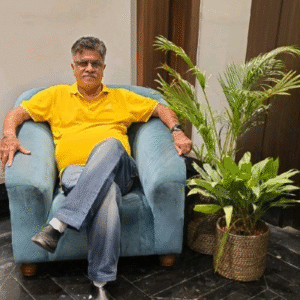 “Similarly, in insurance, GST exemption is beneficial, but actual affordability will only improve if premium pricing mechanisms evolve in the interest of policyholders,” he added.
Two-Wheelers: EV Incentives Secured
The two-wheeler segment, which constitutes nearly three-fourths of India’s auto sales, is staying steady. Motorcycles up to 350 cc will now attract an 18% GST rate instead of 28%, while larger bikes face a 40% tax. EV two-wheelers remain taxed at 5%.
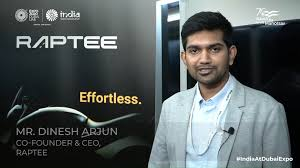
“This removes uncertainty for startups like us,” said Dinesh Arjun, co-founder and CEO of Raptee Motors, an electric motorcycle manufacturer based in Chennai. “Our focus is on scaling affordable EVs, and policy clarity is just as crucial as subsidies.”
Hemant Kabra, Founder and Managing Director of BGauss Auto, concurred: “For commuter buyers, affordability is non-negotiable. Keeping EVs at 5% ensures that mass demand remains intact.”

By protecting the 5% rate, the Council allows India’s expanding EV two-wheeler market, which sold over 700,000 units last fiscal year, to maintain its momentum.
Three-Wheelers: Everyday Mobility Gains
Three-wheelers, essential for India’s shared and goods mobility ecosystem, will now be taxed at 18% instead of 28%. Analysts anticipate that this will reduce entry costs for both electric and ICE variants, promoting adoption in urban and rural areas.
 Saharsh Damani, CEO of the Federation of Automobile Dealers Associations (FADA), described the move as timely and inclusive:”This aligns with expectations and is extremely beneficial for the average consumer. It will stimulate the market for entry-level cars, two-wheelers below 350cc, and especially three-wheelers, which are vital for public and goods transport.”
As Finance Minister Nirmala Sitharaman emphasised, the “Next-Gen GST” is intended not only to simplify India’s tax system but also to touch the daily lives of citizens, aligning affordability with decarbonisation. For customers, it means more value for money; for the industry, it means clarity; and for EVs, it signals policy continuity on the road to a cleaner, electrified future.

Vinkesh Gulati, Chairman of the Research & Academy Federation of Automobile Dealers Associations and Chairman of United Automobiles, which includes Bajaj Auto and Mahindra & Mahindra dealerships, expressed optimism for the auto industry, stating that entry-level two-wheelers and passenger cars will become more affordable. He also said the reduction in the tax rate on buses, trucks, and ambulances to 18% from 28% will spur demand in key commercial vehicle segments amid sluggish economic growth.
“The festive season will be a rocking time for the auto industry,” he concluded.
















Excellent insights also to add no change of ev batteries standalone buying needs to be in 5% gst category because it’s time for replacement of 5 yrs old batteries in e3w, e2w and e4w which will cost huge. Also for swapping infra.
Very Good suggestion Venu. Your insights are appreciated.