

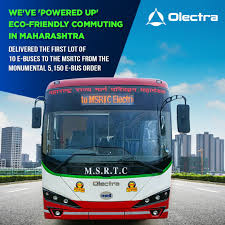
MUMBAI, Mantralaya, 30th May 2025: In a major policy U-turn, the Maharashtra government has reinstated the Rs 10,000 crore electric bus contract with Olectra Greentech Ltd, which had earlier been cancelled due to delivery delays.
As part of the policy turnaround, the government has now granted the company a time extension, offering a fresh lifeline to deliver 5,150 electric buses and ensure continuity in the state’s ambitious EV rollout.
At a joint press briefing with Olectra Greentech officials, Transport Minister Pratap Sarnaik made the announcement. He attested to the fact that the contract’s prior cancellation was revoked following the company’s submission of a revised delivery schedule and compliance guarantees.
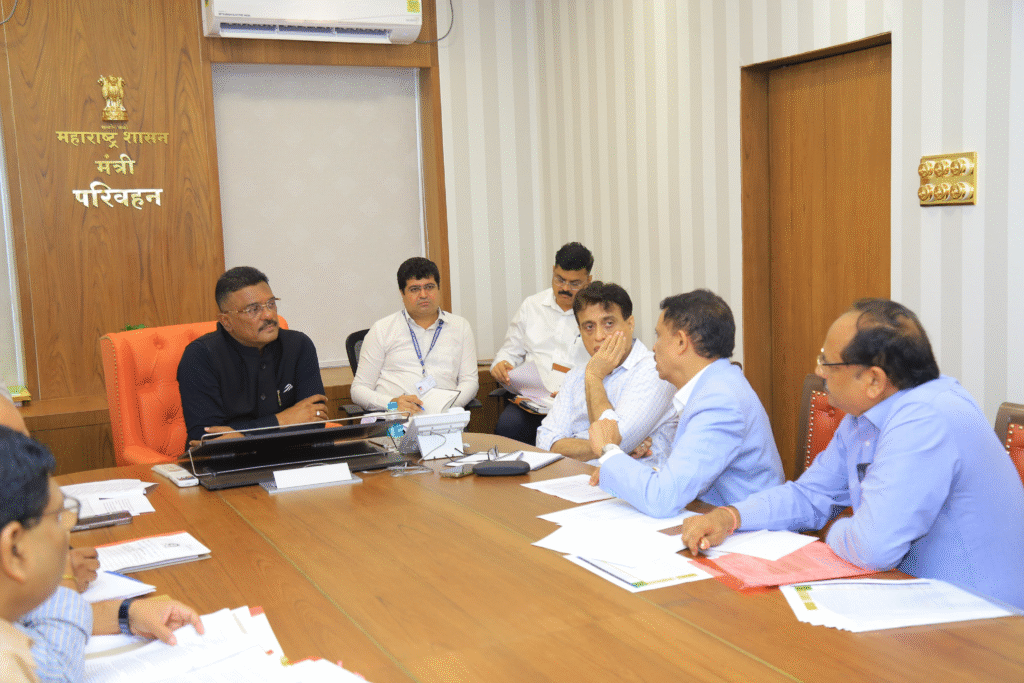
“At first, we ended the contract because Olectra was failing to deliver on the scheduled dates. But following the cancellation, the company came back to us and said they would deliver the buses in three stages: 840 in 2025, 2,150 in 2026, and 1,600 in 2027, according to Sarnaik. “We have chosen to give them a time extension in light of their updated plan and our pressing bus needs.”
The contract’s cancellation jeopardised the state government’s rollout of electric vehicles (EVs), a crucial part of Maharashtra’s clean mobility initiative. The extension, according to officials, aims to maintain the electric bus program’s momentum, particularly in urban areas where public transport is severely strained.
Sarnaik admitted that Olectra’s delays were not the only cause of the implementation issues. He pointed out that the execution of the contract was made more difficult by the state government’s tardiness in paying out electric vehicle subsidies.
According to Olectra officials at the meeting, the state has not yet released ₹3,191 crore in unpaid EV subsidies, including ₹860 crore allocated especially for 1,200 buses. Attendees Dr. Madhav Kusarekar, Managing Director of Maharashtra Transport Corporation, and Additional Chief Secretary Sanjay Sethi were informed that Olectra also expects receivables of an additional ₹2 crore. Olectra officials say these financial problems have hampered production and delivery.

“Olectra and other original equipment manufacturers (OEMs) have been impacted by the state’s delay in releasing subsidies,” Sarnaik stated.
“We must acknowledge that manufacturers will find it difficult to meet demand if our finance department does not provide prompt funding to the transport sector, which will lead to a reduction in bus availability throughout the state.”
The state government ought to consider offering these bus manufacturers viability gap funding, Sarnaik said. The company has delivered 220 buses so far. To make the remaining supply, the company should use a revised agreement.
The minister emphasised that in order to meet the increasing demand for public transport, Maharashtra will need 25,000 buses over the next ten years, at an estimated cost of 70,000 crore. “How we financially support OEMs and state transport agencies is critical to our zero-emission journey and net-zero targets,” Sarnaik said.
He urged the state finance department to give EV subsidies priority to expedite clean transportation initiatives. In order to stay afloat, OEMs require timely subsidies. In order for the financial ecosystem to effectively support us in achieving our environmental goals, we must ensure that it is operating.
The funding issue was also discussed by Sarnaik with Deputy Chief Minister Ajit Pawar. He asserted that Pawar acknowledged the situation and pledged to resolve the matter of providing the delinquent subsidies to the Maharashtra State Road Transport Corporation (MSRTC).
According to Sarnaik, the state government is also considering calling a joint meeting of key stakeholders, such as Maharashtra Chief Minister Devendra Fadnavis, Deputy Chief Minister Eknath Shinde, and Deputy Chief Minister Ajit Pawar. After that, a suitable decision will be made.
Olectra Greentech has been given another chance to play a significant part in Maharashtra’s transition to clean mobility now that the updated delivery schedule has been set. The government’s choice to reevaluate its previous stance is seen as a practical one that strikes a balance between the pressing need for transport and the real-world difficulties of project execution.