

New Delhi, 1st February 2026: India’s Union Budget 2026–27 delivers a blunt message to electric vehicle backers: subsidies are out, supply chains are in.
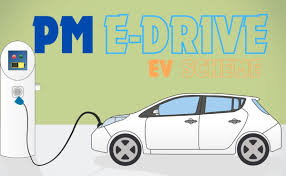
 The PM Electric Drive Revolution in Innovative Vehicle Enhancement (PM E-Drive) scheme sees its FY27 allocation gutted to ₹1,500 crore—a 62.5% plunge from FY26’s ₹4,000 crore budget—heralding the end of demand-side crutches as two- and three-wheelers hit cost parity.
From Splash to Squeeze
Launched in October 2024 as FAME’s successor, PM E-Drive’s ₹10,900 crore outlay targeted broad EV acceleration: ₹3,679 crore for e-2W/3W, ₹4,391 crore for e-buses, ₹500 crore each for trucks/ambulances, and ₹2,000 crore for 72,300 chargers (22,100 fast for cars, 1,800 for buses, and 48,400 for 2W/3W).
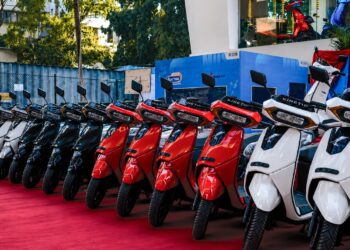
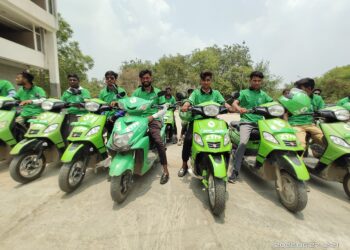
Yet FY27’s ₹1,500 crore—barely above FY26’s revised ₹1,300 crore—shifts gears hard. E-2W subsidies will be phased out by March 2026, with 18.4 lakh units already claimed vs. the 24.79 lakh target by Dec 2025. L5 e-3Ws hit the 2.88 lakh cap early; e-rickshaws lag at 5,267 vs. 39,034.
“ The e-two-wheeler and e-three-wheeler segments are already cost-competitive from a total cost of ownership perspective even without subsidies,” said Hemal Thakkar, Director at Crisil Intelligence. “As a result, most of the demand-side allocation under PM E-Drive is likely to be directed toward electric trucks and charging infrastructure. This does not come as a surprise, given that e-scooter penetration has crossed 15% and e-three-wheeler penetration is already above 30%.”
Charger Lag Looms Large
Infrastructure cash sits idle—guidelines fresh, but disbursals stalled. With 21.24 lakh EVs incentivised to date, charger delays risk stalling momentum as vehicle shops vanish, testing buyer faith in range anxiety’s retreat.
Upstream Lifeline Balances the Cut
Budget 2026 counters with manufacturing muscle: duty-free lithium-ion capital goods (35 added), critical minerals (12 more, atop 25 from 2024), and rare earth corridors in Odisha-Kerala-AP-TN. Tenure extends to 2028, but the signal screams maturity: EVs stand alone.
This pivot marries PM E-Drive’s contraction to structural bets—slashing import bills, forging domestic depth. Two-wheelers graduate; trucks and infra inherit the pot. India’s EV saga matures from subsidy sprint to supply-chain marathon.