Gurugram, July 19, 2026: With electric vehicle (EV) penetration in India expected to rise from the current 8.5% to 30% by 2030, Sanjeev Chawla, Additional Development Commissioner, MSME DFO, Karnal, urged component manufacturers to invest in innovation, intellectual property (IP), and indigenous technology development to capitalise on the rapidly expanding EV ecosystem. Speaking as the Chief Guest at the ASSOCHAM Northern Region’s EV Ancillaries and Auto Components Conclave 2026 in Gurugram, Chawla said the transition to electric mobility presents significant opportunities for manufacturers of suspension systems, battery management systems (BMS), switches, wiring harnesses, BLDC motors, and other EV components. He encouraged enterprises to focus on R&D, document innovations, and leverage government support for patents and IPR, stressing that long-term competitiveness would depend on innovation rather than conventional manufacturing alone.
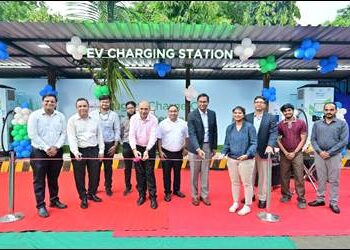
The conclave brought together policymakers, industry leaders, financial institutions and technical experts to discuss the future of India’s EV supply chain, localisation, financing, skilling, and sustainable manufacturing.
Addressing the gathering, M.K. Sardana, Coordinator, Department of Industries and Commerce, Government of Haryana, highlighted the structural shift from internal combustion engine (ICE) vehicles to EVs, noting that while conventional vehicles contain nearly 2,000 moving parts, electric vehicles have only about 18. He urged MSMEs to prepare for this transformation and highlighted Haryana’s Invest in Haryana 2026 initiative and the state’s EV policy, which remains effective until 2027. He also announced that a dedicated MSME policy is expected shortly.
Ajay Mohan Goyal, Joint Director, Department of Industries and Commerce, Government of Haryana, said the future automotive industry would be shaped by the strength of its EV ecosystem rather than vehicle production volumes alone. He noted that Haryana already manufactures nearly 50% of India’s passenger cars and 60% of its motorcycles, giving the state a strong foundation to emerge as a leading EV manufacturing hub. He reaffirmed the state’s commitment to strengthening electric mobility through supportive industrial policies and close collaboration with industry.
The event commenced with a welcome address by Sanjay Jain, Senior Industry Member, Haryana State Development Council, ASSOCHAM, followed by industry insights from Rajiv K. Chawla, Chairman & Founder, JaiRaj Group and Chairman, IamSMEofIndia. Abhijit Mulay, Deputy Director, Automotive Electronics & E-Mobility Group, ARAI, presented the regulatory perspective.
Technical sessions featured experts from Suzuki R&D Centre India, ICCT, Bony Polymers, financial institutions and technology organisations, covering key themes such as localisation of EV components, export competitiveness, financing, technology adoption, Industry 4.0, regulatory readiness, and skill development.
Concluding the event, Ravinder Chandla, Regional Director-North, ASSOCHAM, reaffirmed the chamber’s commitment to working with the Government of Haryana and industry stakeholders to strengthen the state’s EV ancillary ecosystem through policy advocacy, industry collaboration, and knowledge-sharing initiatives.
We use cookies on our website to give you the most relevant experience by remembering your preferences and repeat visits. By clicking “Accept”, you consent to the use of ALL the cookies.
This website uses cookies to improve your experience while you navigate through the website. Out of these, the cookies that are categorized as necessary are stored on your browser as they are essential for the working of basic functionalities of the website. We also use third-party cookies that help us analyze and understand how you use this website. These cookies will be stored in your browser only with your consent. You also have the option to opt-out of these cookies. But opting out of some of these cookies may affect your browsing experience.
Necessary cookies are absolutely essential for the website to function properly. These cookies ensure basic functionalities and security features of the website, anonymously.
Cookie
Duration
Description
cookielawinfo-checkbox-analytics
11 months
This cookie is set by GDPR Cookie Consent plugin. The cookie is used to store the user consent for the cookies in the category "Analytics".
cookielawinfo-checkbox-functional
11 months
The cookie is set by GDPR cookie consent to record the user consent for the cookies in the category "Functional".
cookielawinfo-checkbox-necessary
11 months
This cookie is set by GDPR Cookie Consent plugin. The cookies is used to store the user consent for the cookies in the category "Necessary".
cookielawinfo-checkbox-others
11 months
This cookie is set by GDPR Cookie Consent plugin. The cookie is used to store the user consent for the cookies in the category "Other.
cookielawinfo-checkbox-performance
11 months
This cookie is set by GDPR Cookie Consent plugin. The cookie is used to store the user consent for the cookies in the category "Performance".
viewed_cookie_policy
11 months
The cookie is set by the GDPR Cookie Consent plugin and is used to store whether or not user has consented to the use of cookies. It does not store any personal data.
Functional cookies help to perform certain functionalities like sharing the content of the website on social media platforms, collect feedbacks, and other third-party features.
Performance cookies are used to understand and analyze the key performance indexes of the website which helps in delivering a better user experience for the visitors.
Analytical cookies are used to understand how visitors interact with the website. These cookies help provide information on metrics the number of visitors, bounce rate, traffic source, etc.
Advertisement cookies are used to provide visitors with relevant ads and marketing campaigns. These cookies track visitors across websites and collect information to provide customized ads.