

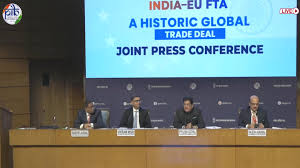
New Delhi, January 28, 2026: India’s freshly inked free trade agreement (FTA) with the European Union has produced a clear winner: hybrid vehicles. Import duties on eligible cars are set to fall to around 40% from the current level of about 110%, starting as early as 2026—unlocking immediate tariff relief within a 250,000-vehicle annual quota for models priced above €15,000 (around ₹15.5 lakh), with duties tapering further to 10% by 2031.
The sharp cut is expected to translate into meaningful price reductions for high-end imported vehicles, making luxury European cars more accessible to Indian buyers, even as battery electric vehicles (BEVs) remain ring-fenced from tariff concessions until 2031. The deal lands amid a $136-billion bilateral trade relationship, now shadowed by renewed U.S. tariff risks under President Donald Trump.
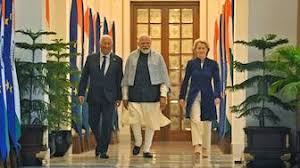
This so-called “hybrid loophole” catapults electrified ICE models into premium SUV showrooms, pitting Audi Q7 plug-in hybrids and Porsche Cayenne hybrids—potentially 20–30% cheaper—against domestic offerings such as the Tata Safari, Mahindra XUV700, and Maruti Suzuki’s Grand Vitara strong hybrid in the ₹20–50 lakh band. Signed shortly after Republic Day, with European Commission President Ursula von der Leyen and European Council President António Costa in attendance, the pact implicitly prioritises hybrids over India’s still-nascent electric vehicle EV) market, where penetration remains below 2%, while testing the country’s localisation ambitions.
Luxury Hybrids Charge Ahead
By being classified as standard automobiles rather than EVs, hybrids sidestep safeguard clauses built into the agreement, giving BMW, Mercedes-Benz, Audi and Porsche a fast lane into the Indian market.
“This FTA will benefit both parties, expand trade, and lead to an exchange of technology and innovation,” said Hardeep Singh Brar, President and CEO of BMW Group India. Santosh Iyer, MD & CEO of Mercedes-Benz India, said the agreement would improve vehicle allocations and access to top-end global models while helping build a stronger luxury car ecosystem. Audi India’s Balbir Singh Dhillon welcomed the “stable and predictable environment” the pact creates for European automakers to invest and innovate.
EVs’ Shielded Window
For domestic EV makers, the deal offers breathing room. Models such as the Tata Tiago.ev, Mahindra XUV400, and MG Comet remain insulated by pricing thresholds and localisation mandates that require 25% local value addition by the third year and 50% by the fifth.
“The calibrated tariff glide path and protection for India’s EV trajectory reflect the balanced recommendations the industry had placed on record,” said C.S. Vigneshwar, President of the Federation of Automobile Dealers Associations (FADA). Tata Motors passenger vehicle head Shailesh Chandra described the approach as balancing market access with domestic manufacturing, while Mahindra Group CEO Anish Shah said the structure preserves core competitive dynamics.
Markets, however, reacted nervously. Tata Motors shares fell 2.3% and Mahindra declined nearly 5%, reflecting concerns that cheaper imported hybrids could begin eroding premium ICE margins well before EV competition intensifies.
CBAM and Hybrid Tailwinds
Layered atop the FTA is the European Union’s Carbon Border Adjustment Mechanism (CBAM), which takes effect definitively today. The regime will tax carbon-intensive exports such as steel and aluminium at €85 per tonne initially, rising to €126 by 2030, with a gradual phase-in designed to nudge exporters toward greener supply chains.
At the same time, the EU’s softened approach to its 2035 ICE phase-out—now targeting a 90% emissions reduction with fleet-wide averaging—extends the commercial runway for hybrids, reinforcing their role as a transitional technology.
OEM Tightrope, Ancillary Upside
 The new framework creates uneven outcomes. Tata Motors shields its mass-market EV portfolio but braces for pressure on premium ICE models. Mahindra’s INGLO-based EV plans remain protected, though analysts see a potential 3–4% volume risk for the XUV700.
Renault India CEO Stéphane Deblaise said the group “embodies the spirit of this partnership” as both an Indian and European player. Skoda Auto Volkswagen India’s Piyush Arora pointed to opportunities to broaden its European portfolio, while Stellantis India chief Shailesh Hazela highlighted export gains.
Auto component makers may be among the earliest beneficiaries. Vikrampati Singhania, President of ACMA, cited prospects for export growth and technology partnerships. Critics such as Kunal Khattar of AdvantEdge Partners argued that excluding EVs favours legacy ICE technologies, while Avaada Group’s Vineet Mittal said the pact could accelerate collaboration in batteries, green hydrogen and solar manufacturing.
Quotas, safeguards, and rules of origin will prevent any immediate import flood. But the direction is clear: hybrids lead in the near term, EVs fortify behind a five-year shield, and components quietly gain ground. India’s $35 billion auto sector is betting that deeper integration into global value chains will matter more than outright protection.