


NEW DELHI: 6th January 2026: India’s electric vehicle push is leaving its experimental phase and entering a narrower, more demanding stretch where only a few segments—and a few players—are likely to break through, argues Dr Uday Narang, Founder and Chairman of Omega Seiki Mobility.
After years of subsidy-led adoption, splashy capacity announcements, and rapid-fire launches, he believes momentum is now shifting decisively to use cases where economics, regulation, and on-ground realities truly align. At the centre of this shift are electric three-wheelers and 1–1.5 tonne small commercial EVs serving intra-city and last-mile logistics, where operators are prioritising efficiency, predictability, and uptime over buzz.
Workhorses, Not Showpieces
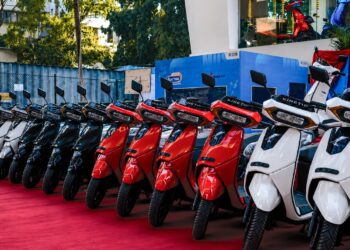
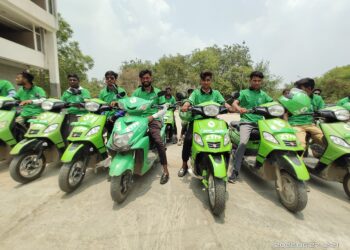
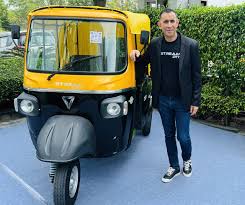
In Narang’s view, the next leg of India’s EV story belongs to vehicles built to work, not to impress. Electric three-wheelers, already the country’s largest EV segment by volume, are set for a fresh wave of growth as shared mobility deepens, urban connectivity improves, and product reliability strengthens.
At the same time, the 1–1.5 tonne electric SCV and light truck category is emerging as the clearest test case for EV economics, particularly on fixed, high-utilisation routes where vehicles operate as rolling balance-sheet assets rather than green pilots. By 2026, Narang expects electric SCVs to move from token pilots to mainstream procurement choices in select urban and intra-city delivery hubs.
Policy Targets Met Early. The Market Takes Over
Recent government data reinforces Narang’s view that electric three-wheelers have moved beyond pilot-stage adoption. Under the PM Electric Drive Revolution in Innovative Vehicle Enhancement (PM E-DRIVE) Scheme—launched in September 2024 with an outlay of ₹10,900 crore, the government had set a target of 2.88 lakh electric three-wheelers (L5 category). That target was met ahead of schedule, leading to the closure of incentives for the segment on 26 December 2025.
According to official data from the Ministry of Heavy Industries, total EV sales across segments reached 21.24 lakh units by the end of December 2025, including over 2.88 lakh electric three-wheelers. Market penetration for e-3Ws is now estimated at around 32%, underscoring how quickly the segment has scaled once economics and use cases aligned.
 For Narang, the early exhaustion of incentives is not a warning sign but a milestone. It signals that certain commercial EV segments, particularly three-wheelers, are becoming self-sustaining, with demand driven increasingly by operating economics rather than policy support alone.
Fewer Players, Bigger Stakes
Narang frames the current shakeout in the EV market as both necessary and healthy. A phase defined by fragmentation and easy money is giving way to tighter capital, higher execution costs, and a clear preference for players with real supply-chain depth and service capability. For commercial buyers, he notes, reliability consistently trumps novelty—tilting the field toward fewer, better-capitalised manufacturers that can keep vehicles on the road and fleets earning.
As 2026 approaches, he expects the focus to shift decisively from the number of launches to the consistency of on-road performance, uptime metrics, and service responsiveness.
Capital and Credit as Moats
Access to finance is fast becoming one of the hardest moats to breach in the EV game, Narang contends. With global funding conditions tighter, investors and lenders are now screening for cash flows, asset quality, and execution discipline rather than top-line growth alone—a shift that naturally favours legacy OEMs with stronger balance sheets and captive finance arms.
Startups, by contrast, are facing sharper scrutiny, particularly in commercial EVs, where Narang says funding will increasingly hinge on hard performance data, utilisation patterns, and clearer residual-value visibility. He expects financing conditions to ease only after mid-2026, once lenders gain confidence in how EV assets behave in the real world—unlocking leasing models and structured credit for small fleets and first-time EV adopters.
Beyond Metros, Into the Heartland
A geographic reset is also underway. While early EV adoption clustered in large metros, Narang points to Tier 2 and Tier 3 cities as the next growth engines—especially for electric three-wheelers and small commercial vehicles, where operating conditions are simpler and payback cycles faster.
Winning in these markets, he cautions, will depend less on glossy branding and more on ground-level execution: distribution reach, local service capability, and the ability to guarantee uptime to customers who cannot afford idling assets.
From Subsidy Play to Use-Case Play
Narang argues that India’s EV market is steadily shifting from incentive-driven demand to adoption anchored in total cost of ownership and use-case clarity. Policy support still matters, but fleet operators are now benchmarking economics, reliability, and service responsiveness far more rigorously—because EVs in commercial mobility are income-generating tools, not discretionary purchases.
In this more disciplined phase, he insists, the execution of manufacturing quality, after-sales reach, safety standards, and a skilled workforce will separate long-term winners from a crowded field of headline-driven contenders.
An Irreversible, Selective Transition
For Narang, India’s EV transition is no longer in question, but its trajectory will not be uniform. Growth will be led by pockets where the economics already work, with electric three-wheelers and small commercial vehicles at the front of the pack, while more aspirational segments evolve at a slower pace.
As the industry heads into 2026, he believes the era of experimentation is giving way to an era of execution—and the companies that best align technology with economics and ambition with discipline are the ones most likely to define the next chapter of Indian mobility.