


INDIA, September 27, 2025: Tata Motors’ sweeping leadership changes and demerger of its commercial vehicles arm are one of the most significant restructurings in the company’s history, and they represent a pivotal realignment for the Tata Group. For investors, there are five key takeaways.
 First, a more defined strategic focus with two independently listed entities separating passenger/EV/JLR from commercial vehicles.
Second, leadership realignment involves appointing dedicated CEOs for each vertical. Third, there will be a greater emphasis on electric vehicles and luxury cars, with Shailesh Chandra in charge of passenger vehicles and P.B. Balaji in charge of Jaguar Land Rover.
Fourth, more stringent capital allocation discipline, with independent CFOs for both PV and CV companies. Fifth, Tata Motors shareholders will receive equal shares in the new CV company, thereby unlocking shareholder value.
A Strategic Split Ushers in New Era
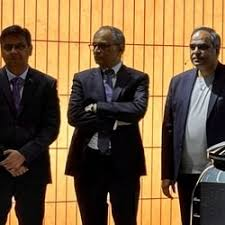 Tata Motors is undergoing the most profound transformation in its corporate history, with a top-level management reshuffle and the formal demerger of its commercial vehicles arm taking effect October 1, 2025. For the Tata Group, the move marks a strategic fork in the road; for investors, it crystallises five sharp takeaways: greater strategic focus, dedicated leadership, capital discipline, an EV/luxury charge, and high-impact value unlocking.
Leadership Moves Sharpen Growth Focus
The new structure separates Tata Motors into two publicly traded entities, each pursuing its own growth strategy: passenger vehicles—including EVs and Jaguar Land Rover (JLR)—and TML Commercial Vehicles Limited, a stand-alone commercial vehicle company.
Shailesh Chandra takes over as MD & CEO of passenger vehicles, Girish Wagh leads commercial vehicles, and financial architect P.B. Balaji makes a high-profile move to JLR, aided by the appointment of Dhiman Gupta as Group CFO.
Building Global Competitiveness—With Local Agility
This reorganisation follows the National Company Law Tribunal’s approval and puts Tata Motors on a path that mirrors global best practices.
Senior executives in the Tata Group told EV Story, summarising the rationale starting that the strategic realignment will give both businesses sharper focus, greater agility, and deeper customer centricity, increasing shareholder value and employee opportunities.
‘The end result is two streamlined, globally competitive businesses designed for synergies across the Tata Group but capable of pursuing very different goals.” They said.
EVs and Luxury Drive Passenger Ambitions
Shailesh Chandra, who led Tata’s electric mobility initiative, is now in charge of integrating EV development and software into the company’s overall passenger portfolio. “Tata plans to consolidate its early lead in EVs, expand into premium mobility, and drive tech synergies across the group,” said an analyst at a Mumbai investment firm.
Chandra’s rise coincides perfectly with a new era in which electrification, connected services, and the expansion of JLR’s luxury footprint are the catalysts for explosive growth. For investors, it’s a cleansing growth story that connects India’s SUV boom and electrification to a resurgent Jaguar Land Rover.
Commercial Vehicles Target Global Expansion
On the commercial vehicles side, Girish Wagh takes over as MD & CEO of TMLCV, inheriting a business unburdened by the capital demands of EV and luxury.
The CV division, which was previously Tata’s cash engine, can now concentrate on international expansion, agile capital deployment, and innovation in small commercial vehicles. The market challenge remains: restoring margins and leveraging exports to emerging economies (from Africa to Latin America) while managing cyclicality. “The goal now is to sharpen strategies and allocate resources to segments where returns are strongest,” said a top , highlighting a vision that blends resilience with efficiency.
Financial Discipline Powers JLR’s New Era
P.B. Balaji, meanwhile, moves from Group CFO to take the reins as CEO at Jaguar Land Rover. Credited for steadying Tata Motors through years of balance sheet repair and transformation, Balaji’s financial discipline will be instrumental as JLR embarks on a blockbuster new product cycle, starting with the all-electric Range Rover and culminating in the company’s push for carbon-neutral luxury. “Profitability and prudent capital allocation remain foundational,” analysts said, offering guidance on JLR’s next chapter.
Dhiman Gupta’s appointment as CFO brings continuity, especially in EV and corporate finance. Separate CFOs for passenger and commercial vehicles send a clear message: each business will have the resources and autonomy to execute tailored strategies.
Investor Value: Clearer Metrics and Re-Rating Hopes
For shareholders, the demerger resolves years of conflict between Tata’s cash-generating CV division and its capital-hungry, high-growth PV/EV/JLR segments. Tata Motors Passenger Vehicles, which will soon be renamed, will focus on electrification, premiumization, and technology as India’s response to the global EV and luxury shift.
The commercial vehicle business is a dependable, pure-play platform for trucks, buses, and export-led growth. For the first time, both can be valued independently, with direct benefits flowing to investors:Tata Motors shareholders will receive equal shares in the new CV company, with stakes based on the most relevant growth trajectories for their respective portfolios.
Markets have already responded accordingly. Tata Motors shares rose 1.45% on Friday, closing at ₹673.95, as investors welcomed the management overhaul and demerger’s clean lines.
Analysts believe a re-rating is likely, with better visibility into EV/luxury and commercial vehicle profit pools. “Value unlocking is unavoidable as capital is freed up for EV and luxury businesses,” said a Mumbai-based equity strategist, “but execution risks aren’t trivial,” citing competitive threats to EV growth and global uncertainty at JLR.
Industry Benchmark: A Playbook for the Next Era
Tata’s new structure is significantly more forward-thinking than competitors’.
Maruti Suzuki combines its EV and mass passenger vehicles into a single entity, whereas Mahindra separates its passenger, tractor, and commercial divisions. Tata’s split allows investors to choose between high-growth, tech-focused PV/EV/JLR and consistent cash flow in CVs—a dual strategy that sharpens management focus, accelerates decision-making, and allows each unit to write its own growth story.
Conclusion: Tata Bets on a Dual-Track Future
Finally, Tata Motors’ demerger and leadership transition are more than just a personnel change; they represent a strategic bet on the future of mobility.
Tata Motors plans to compete directly with Maruti and Hyundai in mass-market electric mobility, Ashok Leyland in commercial vehicles, and JLR to boost its global luxury credentials. This repositioning provides shareholders with clarity, accountability, and a direct play on resilience and growth in India’s auto sector, which has finally been decoded for the new era.