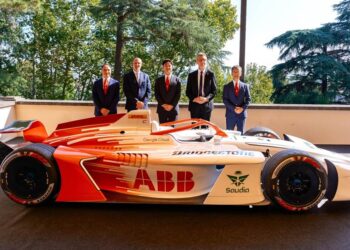


INDIA, 26th September 2025: With its acquisition of Italy’s Engines Engineering S.p.A. and the launch of a Global Centre of Excellence (CoE) in Bologna, TVS is fusing MotoGP-grade racing DNA with its Indian R&D muscle.
 This enables the company to achieve faster cycles from prototype to showroom, sharper premium differentiation for TVS and Norton motorcycles, and advanced EV-ready platforms for connected, sustainable mobility.
While peers like Tata Motors, Mahindra, and Hero MotoCorp have invested in global design hubs, TVS’s Bologna CoE sets it one lap ahead, integrating international racing expertise with India’s design ambitions. The bet is clear: design, not just manufacturing, will decide the next leaders of mobility.
TVS now plans to boldly integrate MotoGP-tested racing expertise, rapid prototyping, and next-generation electric vehicle (EV) engineering within a truly global innovation hub. This marks a level of design sophistication that is unmatched by rivals in India’s two- and four-wheeler sectors.
 “The establishment of the new Italian Global Centre of Excellence marks another milestone in strengthening our capabilities and accelerating our journey to reimagine mobility,” said Sudarshan Venu, Chairman of TVS Motor Company.
“By combining the creativity and racing expertise of Engines Engineering with our engineering and design strengths, we are expanding our ability to deliver premium, connected, and electric vehicles that set new global benchmarks. Importantly, this Centre of Excellence further enhances Norton’s capabilities, enabling it to advance its craft of exceptional high-performance motorcycles that honor its iconic legacy while elevating its future ambitions.”
While Hero MotoCorp’s Jaipur Centre of Innovation and Technology, supported by its German R&D satellite, focuses on mass-engineering, Tata Motors relies on studios in Pune,
Coventry and Turin for SUV and EV design. Mahindra refines its design language at an expanding facility in Mumbai, concentrating on XUVs and Born EVs. However, none of these industry leaders has successfully combined live motorsport insights, premium design processes, and a modular, EV-ready platform within a single, internationally integrated design operation.
Racing DNA, Accelerated Globally
 TVS has always championed the idea of transferring insights from the racetrack to the road. Its Apache RR 310 racing program and partnership with Petronas have long served as domestic test beds for this philosophy. Now, the Bologna CoE is poised to take this ethos global, integrating MotoGP-caliber engineering with AI-driven styling, advanced materials, and digital prototyping. “It’s not enough to follow the path; you have to shorten the distance between prototype and showroom,” a senior design leader at Engines Engineering remarked, underscoring the new feedback loops that TVS has enabled.
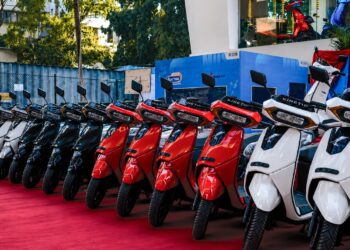
With MotoGP exposure, TVS gains a significant edge in engineering differentiation. Aerodynamics, thermal management, and component resilience, critical for both high-performance internal combustion engine motorcycles and rapidly growing electric platforms like the iQube, are designed and validated at the highest levels of motorsport.
While Honda and Yamaha have long highlighted their own racing heritage, TVS is the first Indian OEM to directly channel such expertise from within a global, owned R&D system.
Redefining Peer Benchmarks
India’s leading automakers are intensifying their global design footprints, but their goals and execution differ. Tata Motors’ global studios emphasize user-driven design for SUVs and EVs, with Rajendra Petkar, President and Chief Technology Officer stating earlier, “We aim to translate customer insights into products that are both functional and emotionally engaging.”
Mahindra’s Mumbai MIDS operation consolidates visual themes for XUVs and Born EVs, with former design chief Pratap Bose emphasizing that “design is at the core of our product identity.”
Hero MotoCorp focuses on scalable engineering for two-wheelers via its Jaipur base and German satellite. Maruti Suzuki, Honda, and Yamaha maintain strong Japanese influences, with Indian designers mainly supporting global directives.
TVS stands apart by fully integrating motorsport engineering and rapid prototyping into its new CoE, providing a genuine speed-to-market advantage. This foundation benefits both Norton Motorcycles and TVS’s domestic premium range by enabling swift iteration, global-grade luxury design, and the ability to respond in real-time to shifting market and technology trends.
How TVS has set its future EV and Ready Innovation Path
Strategically, the Bologna hub paves the way for TVS’s next chapter as an EV innovator. TVS’s iQube line and future electric offerings will benefit from modular Italian platform development, sustainable materials, and digital simulation—allowing TVS to move from idea to production faster than its competitors. “The CoE gives us a competitive edge in turning concepts into production-ready solutions, whether for high-performance bikes or scalable EVs. It’s about integrating global engineering standards with Indian innovation to set benchmarks worldwide,” Venu added. While Mahindra and Tata may adopt similar approaches in passenger EVs, TVS possesses a unique blend of motorsport-derived speed and international design agility.
Strategic and Industry Implications
Seasoned analysts see design and technology, more than scale, as the defining factors in the global hierarchy among Indian OEMs. TVS’s ambitious Bologna expansion sends a clear message: India’s path to leadership in high-performance, electric, and premium mobility runs through world-class design. This approach not only reshapes TVS’s competitive landscape but also sets the stage for the future of automotive in India.