

Mumbai, September 9, 2025: As India joins the global community in celebrating World EV Day, reaffirming its commitment to a greener, cleaner, and more sustainable future. This day highlights the importance of electric vehicles (EVs) in reducing carbon emissions, combating climate change, and promoting energy independence. Across the country, various events, awareness campaigns, and EV exhibitions are being held to showcase the latest advancements in electric mobility. Government bodies, automakers, startups, and environmental organisations are coming together to educate citizens on the benefits of EV adoption — including lower running costs, reduced pollution, and enhanced energy efficiency.
India has made significant strides in the EV space under initiatives like the FAME India Scheme, the National Electric Mobility Mission Plan (NEMMP), and the Production-Linked Incentive (PLI) Scheme for advanced cell chemistry and EV manufacturing. The push for robust EV infrastructure, including charging stations and battery swapping networks, is also gaining momentum.
As India moves closer to its target of net-zero emissions by 2070, World EV Day serves as a reminder of the crucial role electric vehicles will play in shaping a sustainable transport ecosystem for the future.
On World EV Day, EV Story brings voices of the EV industry right from corporate announcements, government commitments, and industry initiatives that highlight the country’s growing momentum in electric mobility.From new charging infrastructure in Mumbai to state-level policies in Madhya Pradesh, the day is expected to showcase how businesses, policymakers, and associations are collaborating to accelerate the transition to clean transportation.
Corporate India Charges Ahead.
Shailesh Chandra, Managing Director, Tata Motors Passenger Vehicles Limited.

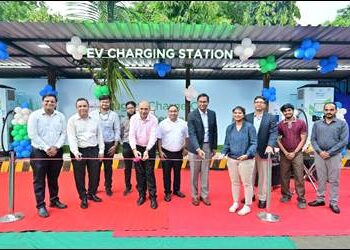
Tata Power, in partnership with Tata.ev, will be inaugurating Mumbai’s largest public fast EV charging hub near the city’s international airport, Terminal 2. The location is strategic, catering to both frequent fliers and the city’s growing base of EV users.
Tata Motors plans to grow its electric vehicle charging infrastructure fivefold by the end of this decade as it looks to address concerns over range anxiety and inadequate charging infrastructure.
The automaker aims to expand its public charging points to over 1 lakh from the current 22,000, with a target of more than 2,000 cities and towns for fast charging.
Vinod Agarwal, Managing Director & CEO, VE Commercial Vehicles Ltd (VECV),
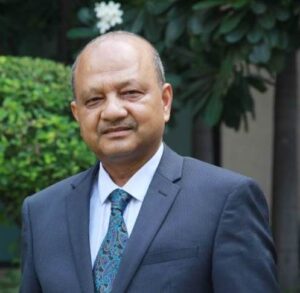
VE Commercial Vehicles (VECV) aims to capitalise on the opportunity to expand its electric vehicle portfolio. The Volvo Group-Eicher Motors joint venture recently unveiled the Eicher Pro X Small Truck, the category-first Eicher 2055 EV, and the Skyline Pro Electric bus, which are already in use for school, staff, airport, and city transportation in several Indian cities. To ensure adoption, VECV has partnered with Charging Point Operators, giving customers access to thousands of charging stations across India. Sustainability is also central to VECV’s strategy: 42% of its energy needs are already met by renewable sources, which are supported by 75 MW of captive solar capacity. The company plans to lift this share to 70% by FY27.
Suman Mishra, Managing Director & CEO, Mahindra Last Mile Mobility Ltd.

, “Affordable and accessible sustainable last-mile mobility can help India achieve the twin purposes of economic growth and environmental well-being. At Mahindra Last Mile Mobility Limited, we are proud that our 2.7 lakh plus electric commercial vehicles have clocked 4.5 billion kilometres, preventing more than 185 kilo metric tonnes of CO₂ emissions — an impact equivalent to planting 4.3 million trees. On this World EV Day, we reaffirm our commitment to accelerating India’s last-mile electrification movement, making sustainable mobility both attainable and transformative for all.”
Luxury car makers say the transformation to EVs is part of their company’s promise to build a sustainable future
Santosh Iyer, Managing Director & CEO, Mercedes-Benz India
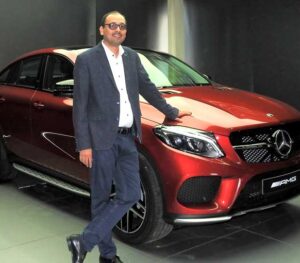
“Electric vehicles represent not just a shift in technology, but a transformation in how we envision sustainable luxury. At Mercedes-Benz, we believe true luxury and sustainability go hand in hand. World EV Day is a celebration of this commitment — a reminder that electrification is a long-term journey dedicated to creating exceptional experiences while honouring our responsibility to the planet. Together, we can accelerate this transition and empower customers to embrace a cleaner, smarter future without compromise.”
“The recent decision by the Government to continue the existing GST on BEVs underlines policy consistency and a strong conviction towards a decarbonised future. Globally, we further strengthened our EV portfolio with the debut of the all-new electric GLC at IAA 2025, showcasing bold design, cutting-edge technology, and our new MB.OS platform.”
Balbir Singh Dhillon, Head of Audi India
“Electric mobility in India has witnessed steady demand, and we believe the next
 decade will be transformative for the industry as well as for customers. At Audi India, our e-tron range, comprising four electric cars, has been embraced by progressive customers who are looking for sustainable yet uncompromising luxury.
To make this transition seamless, our ‘Charge my Audi’ initiative gives access to over 6,500 charging points across the country, offering customers the confidence and convenience they need. We see this as just the beginning.
With the right infrastructure, innovation, and policy support, India has the potential to emerge as one of the most significant EV markets in the world and we are prepared to contribute to this journey.”
Uday Narang, Founder & Chairman, Omega Seiki Mobility

“On this World EV Day, I extend my greetings to the business community and the dynamic startup ecosystem that continues to champion green mobility. Over the past year, the EV industry, especially the electric three-wheeler category (both cargo and passenger categories), has transitioned from a phase of rapid experimentation to one of consolidation,” remarked Uday Narang, Founder & Chairman, Omega Seiki Mobility
Narang says that sustainable business models and stronger market players are emerging. “This marks a turning point in our journey, a sign that the sector is maturing and becoming more resilient.” He remarked that the government is driving the larger EV mission for the nation, ensuring India stays on track to lead the global transition towards clean mobility.” “As the market stabilises, the responsibility now lies with startups, entrepreneurs, and established businesses to come together and accelerate the adoption of clean technologies. The future of mobility is not just about vehicles but about building green businesses that create value for society, the economy, and the planet. On this day, let us reaffirm our commitment to innovation, collaboration, and sustainability as we drive the change towards a cleaner, smarter tomorrow.” Narang added

Nishant Arya, Vice Chairman of the JBM Group
At JBM EV, we envisioned this transition towards clean mobility a decade back. Today, we are proud to be at the forefront of this movement. Our new age electric buses are running and getting deployed globally across India, Europe, APAC and MEA regions having made dominating contribution to the environment:
– Clocked 200+ Mn green kilometers
– Reduced over 270+ Mn kgs of CO₂ emissions
– Over 100+ Mn litres of diesel saved
– Provided safe, clean and affordable rides to over 1 Bn citizens
From metros to Tier-2 & Tier-3 cities, our mission has been clear, to democratize sustainable mobility and make it accessible for the common man.
On this World EV Day, I reaffirm our commitment at JBM Electric Vehicles towards deploying an ecosystem of sustainable transport solutions, advanced battery technologies, fast charging & clean energy that align with the global Net Zero targets. Our resolve of clocking 3 Bn green kilometers in the next 3 years stands in solidarity with this commitment.
Battery Makers: Making EVs Accessible
 Battery replacement and affordability were also important considerations. Pulkit Khurana, CEO and co-founder of Battery Smart, described World EV Day as a reminder that clean mobility must be inclusive. “Our mission is to make electric mobility affordable and accessible for all—powered by driver trust, first-time EV user belief, partner commitment, and policymaker support,” he stated.
“Together, we are driving EV adoption and laying the groundwork for India to become a global hub for EV innovation, scale, and sustainable mobility leadership.”
Analysts: From Incremental Change to Bold Reimagining
 Industry experts believe that India’s EV opportunity extends beyond adoption numbers. Srihari Mulgund, Partner and New-Age Mobility Leader at EY-Parthenon India, stated that “progress today requires more than incremental shifts; it calls for bold reimagination.”
India is at a critical juncture in its mobility evolution. With demographic scale, engineering innovation, and policy acceleration—including initiatives such as FAME II, the 5% GST rate, and PLI schemes—the country is not only preparing for but actively shaping the electric future.”
Ulgund went on to say that India has the potential to lead not only in the rapidly expanding EV market but also as a global hub for innovation and sustainable transportation.
Chetan Maini, Co-founder and Chairman, SUN Mobility
 ” As we celebrate World EV Day 2025, it’s inspiring to see electric mobility scaling at unprecedented pace. Millions of kilometers are now driven on EVs monthly, enabled by expanding charging and battery swapping networks, directly reducing carbon emissions and creating cleaner air. While India’s EV penetration is still in single digits, we are catching up to global leaders like China and parts of Europe, where 30% to 40% of new sales are EVs. We are building strong momentum in segments such as 3-wheelers, with EVs capturing over 50% of new sales. These figures highlight both the strides we’ve made and the distance we must cover. Collaboration between manufacturers, energy providers, and policymakers is driving sustainable mobility forward. However, to achieve the Government’s 30% EV penetration target by 2030, policy support must match industry ambition. Critical levers include continued tax incentives and a rationalized GST regime on batteries, vehicles and charging & swapping services to enhance affordability and accelerate adoption across all vehicle segments. This transformation reflects our collective commitment to reducing fossil fuel dependence and building a cleaner, sustainable future for generations to come”
Associations: Creating Communities around EVs
Industry associations and think tanks used the day to foster collaboration. The NetZero Energy Transition Association (NETRA) will be hosting the India eMobility Leadership Talk, a global virtual forum to discuss how to accelerate EV adoption and showcase charging infrastructure innovations.
The Energy and Resources Institute (TERI) hosted a gathering of EV champions on its Gurugram campus. The event focuses on the human side of EV adoption and smooth, silent rides, as well as the challenges of early adoption, and includes the release of a position paper titled “Let’s Electrify—Accelerating Electric Vehicle Adoption and Awareness in India.”
Madhya Pradesh government steps up
At the state level, Madhya Pradesh received the most attention. Chief Minister Dr Mohan Yadav announced that the state has become the first in India to implement a dedicated Electric Vehicle Policy, intending to establish itself as a manufacturing hub and clean mobility leader.
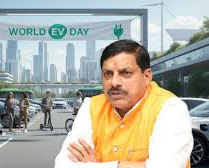
The state will soon set up an EV Promotion Board to coordinate across departments. The policy includes incentives such as exemptions from road taxes and registration fees, support for charging and battery-swapping infrastructure, and retrofitting allowances for two-wheelers, three-wheelers, and cars.
Targets are lofty: by 2030, the state wants 40% of two-wheelers, 80% of three-wheelers, 15% of cars, and 40% of buses to be electric. Subsidies of up to ₹10 lakh are provided for charging stations, ₹5 lakh for battery-swapping stations, and ₹2 crore for skill development and R&D. Bhopal, Indore, Gwalior, Jabalpur, and Ujjain will be established as EV model cities.
“Madhya Pradesh is ready to lead India’s EV revolution,” said Yadav, citing the state’s industrial base and access to lithium reserves as advantages.
Anish Raghunandan, President & Client Partner – TML Group, Tata Technologies.

“The global shift to electric mobility is not just an industry trend, but it is a societal imperative. As nations pursue a greener future and consumers demand sustainable choices, the EV industry stands at a decisive crossroads—where innovation must meet purpose. At Tata Technologies, we’re accelerating this transformation through our deep domain expertise, digital engineering capabilities, and global partnerships with leading OEMs. Our focus goes beyond the vehicle; we’re reimagining the entire value chain, from responsible sourcing to digital compliance and sustainable manufacturing.
The theme for this World EV Day, The Better Manifesto, is a timely call to action. It urges all of us to move from intent to impact—to engineer solutions that are not only better for businesses but better for people and the planet too. Together, we can make electric mobility not just a technological shift, but a symbol of positive change for generations to come.”
A Converging Momentum
Taken together, the announcements demonstrate that India’s EV landscape is no longer limited to passenger vehicles. Stakeholders are expanding the ecosystem through everything from buses and small trucks to battery swapping and skill development. The convergence of private investment, government incentives, and grassroots community building demonstrates that the transition to electric mobility is becoming a reality.
As one industry observer put it, “World EV Day is no longer symbolic, it’s becoming a milestone marker of how far India has come and how far it intends to go.”