

NEW DELHI: 1st September 2025:India’s automotive landscape is evolving, not just in terms of rising sales but also through distinct regional demands. Recent data from the Society of Indian Automobile Manufacturers (SIAM) highlights significant variations: Maharashtra leads in passenger vehicle sales, Uttar Pradesh dominates the two- and three-wheeler market, while Southern states are advancing in shared electric mobility.
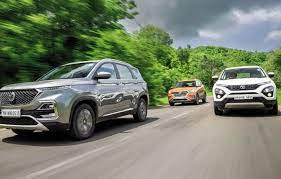
For automakers, financiers, and policymakers, the implication is clear: there is no universal solution. Dealer networks, electric vehicle (EV) rollouts, and financing strategies must cater to local conditions, with each state serving as a unique mobility laboratory.
Maharashtra: A Hub for Middle-Class Aspirations
In the first quarter of FY26, Maharashtra sold 119,000 passenger vehicles, accounting for nearly 12% of India’s total sales—the highest in the country by a significant margin. The Mumbai-Pune corridor, boosted by increasing incomes and favourable lending conditions, underpins strong sales of luxury vehicles and SUVs. “Maharashtra is where India’s middle class dreams in four wheels,” remarks a senior dealer in Pune. “Cars remain the ultimate symbol of success.” Robust infrastructure, including expressways and urbanisation, makes car ownership both practical and aspirational.

Uttar Pradesh: The Dominance of Two- and Three-Wheelers
Uttar Pradesh recorded over 817,000 two-wheeler sales in Q1, which constitutes 17.5% of India’s market—the largest total for any state. Three-wheeler sales are also notable, with 21,000 units sold, largely driven by demand in Tier-2 towns. The popularity of electric two-wheelers is booming in Lucknow, Ghaziabad, and Noida, propelled by state subsidies, improved charging networks, and gig-economy usage. “UP is where the mass-market EV transition is taking place,” says a Delhi auto analyst, pointing out that Ola scooters and e-rickshaws are making a significant impact.
Southern States: Experimenting with Shared Mobility
The southern states collectively led three-wheeler sales with 52,000 units. Karnataka, Tamil Nadu, and Telangana are at the forefront of adopting EV auto-rickshaws for ride-hailing fleets and public transportation. Tamil Nadu aims to position itself as India’s EV export hub, while Bengaluru and Hyderabad are vital to the shared mobility startup ecosystem. “Southern cities benefit from high public transport usage and a culture of shared commuting,” explains a startup founder from Bengaluru. “EV three-wheelers integrate seamlessly into this environment.”
A Fragmented Road Ahead
SIAM’s latest figures reveal a broader truth: India’s transition to new mobility is fragmented, with states acting as living laboratories for innovation and adoption. “India is not a single auto market,” remarked the CEO of a leading passenger car firm. “It consists of multiple markets, each with its own dynamics.”
If trends continue, Maharashtra will keep buying cars, UP will keep riding scooters and rickshaws, and the South will keep reimagining shared fleets—accelerating along their own lanes in the journey of mobility.