

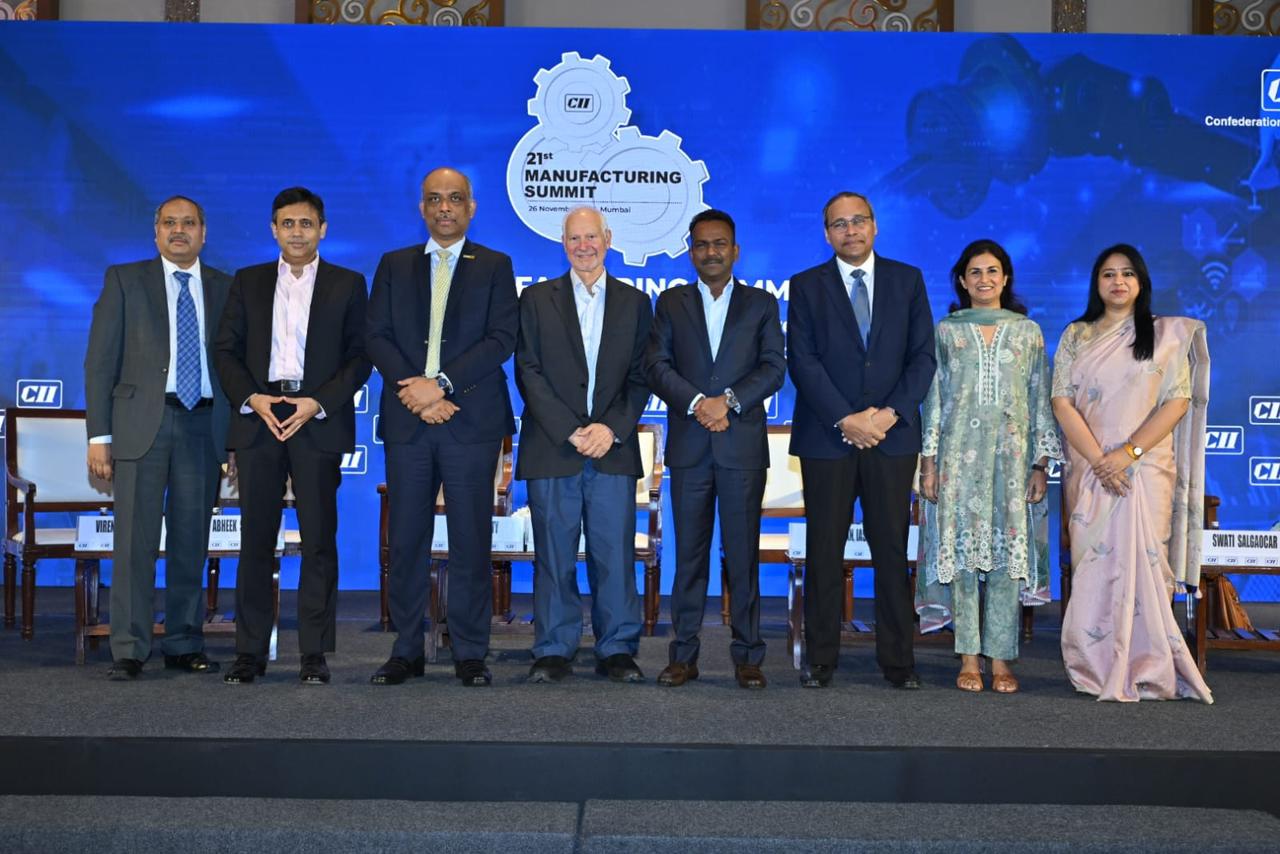
MUMBAI, 27 November 2025: At the 2025 CII Manufacturing Summit in Mumbai, a new three-word test came into sharp focus: compete, digitalise and decarbonise. The conversation moved decisively away from land, subsidies and incremental fixes to the harder question of whether India can build manufacturing capabilities that match global benchmarks on productivity, technology depth and sustainability.
India’s top corporate leaders said that if this transformation succeeds, the country’s manufacturing story will be defined less by low costs and more by smarter, greener, globally credible industrial ecosystems.
 “Manufacturing has always been the engine that powers nations, and India now stands on the brink of a defining leap,” said Jamshyd N. Godrej, Past President of CII and Chairman of the Summit. Rising investments, a favourable demographic profile and a wave of supply-chain realignments have created what he called an “unmissable inflection point” provided India can close its productivity and technology gaps.
Competitiveness: Scale Is Not Enough
India’s manufacturing rise has historically leaned on labour arbitrage and domestic-market scale. At the summit, leaders made it clear that the next phase will require far more than size.
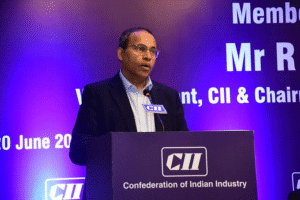 “Leadership in the twenty-first century will be shaped not by scale alone, but by the ability to innovate, digitalise, and empower people,” said R. Mukundan, President-Designate of CII and Managing Director of Tata Chemicals.
That framing reflects a widening recognition that competitiveness now hinges on factories capable of matching global standards on quality, yield, cycle times and reliability — not just delivering low costs.
This pressure is already being felt. Automotive, chemicals, electronics and machinery manufacturers now face global buyers who are tightening performance criteria and diversifying sourcing away from China. Domestic firms also find themselves competing with producers in Vietnam, Mexico and Eastern Europe, pushing the bar on what “competitive” really means.
The open question is whether India’s industrial ecosystem can generate the deeper capabilities needed for this leap: stronger research pipelines, tighter supplier integration, higher skill intensity on the shop floor and greater value retention within domestic supply chains.
Technology: The Hardest, Most Transformative Shift
If competitiveness is the ambition, technology is the mechanism. Across the summit, speakers underscored that India’s manufacturing ascent depends on how aggressively it embraces automation, AI, industrial IoT and next-generation engineering technologies.
 “Technology is accelerating, infrastructure is upgrading, and sustainability is non-negotiable. These constants define the future of manufacturing, and India must lead by mastering them,” said Abheek Singhi, Senior Partner at Boston Consulting Group. Globally, digital twins, autonomous inspection systems, predictive analytics and smart logistics are fast becoming core drivers of throughput, quality and cost.
India’s largest industrial firms have already accelerated automation since the pandemic, but adoption remains uneven, especially among mid-sized manufacturers that underpin exports. Closing this gap, executives noted, will require technology-led skilling, supplier digitisation and cluster-level modernisation programmes that can upgrade entire industrial districts, not just marquee players.
Supporting this shift is what Deepak Shetty, CEO of JCB India and Chair of the CII Manufacturing Excellence Council, called India’s most cohesive policy environment to date.
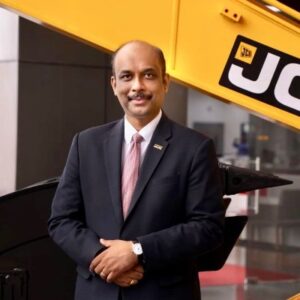 “From the Production-Linked Incentive schemes to Gati Shakti, GST 2.0, and the National Manufacturing Mission, India now has an aligned set of policy catalysts that can unlock a $7.5 trillion manufacturing economy by 2047,” he said. Policy alignment, historically a weak link in India’s industrial strategy, is now seen as critical for technology-heavy sectors like electronics, EVs, batteries and precision engineering.
Sustainability: India’s New Licence to Operate
Alongside competitiveness and technology, sustainability emerged as the third non-negotiable pillar. With global OEMs moving toward carbon-neutral supply chains, Indian manufacturers face intensifying pressure to cut emissions, electrify operations and embed renewable energy into industrial clusters.
“Indian manufacturing is becoming more ambitious, more modern, and more outward-looking,” said Swati Salgaocar, Past Chairperson of CII’s Western Region. “The journey ahead requires sustained commitment — from industry to invest in capacity and R&D, from government to keep reforms moving, and from institutions like CII to strengthen training, capabilities, and global partnerships.”
Nowhere is this alignment more visible than in Maharashtra, which used the summit to reaffirm its ambition of becoming a $1 trillion economy by 2030 — built on clean, technology-intensive manufacturing.
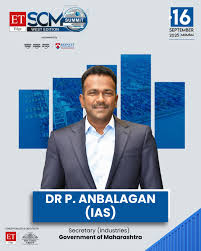 “Maharashtra is not just contributing to India’s growth story, it is shaping it,” said Dr. P. Anbalagan, Secretary for Industries in the state government. With a $530-billion economy, the country’s highest share of FDI inflows and a skilled workforce, the state is positioning EVs, semiconductors, green energy and advanced engineering at the centre of its $850-billion investment pipeline under its New Industrial Policy 2025.
A New Industrial Philosophy
The convergence at this year’s summit signals a wider philosophical shift within India Inc. For years, manufacturing strategies oscillated between incentives and infrastructure. The emerging playbook focuses on competitiveness, technology, and sustainability, which is tougher but far more aligned with global industrial realities.
If India delivers on this three-pillar strategy, it could legitimately break into the top tier of global manufacturing economies over the next two decades. But the window is narrow, and global buyers’ expectations are unsparing.
The consensus at CII’s 2025 summit was blunt: India’s next manufacturing chapter will not be judged by output alone, but by the kind of factories it builds – smarter, greener and globally competitive.