

NEW DELHI, 30th August 2025:One in five new vehicles registered in the capital is electric, and more than 20,000 green jobs have been created through the development of charging infrastructure. And now even Oslo wants to learn from Delhi’s experience.
The Indian capital has become the country’s test case for electric vehicles, with its policies and adoption rates drawing attention from global leaders seeking models of urban clean mobility.
Audun Garberg, Oslo’s deputy director and head of climate change, rode a DEVI bus on a central Delhi route. “The community-based scheduling and affordable fares demonstrate how electric buses can solve the ‘first- and last-mile’ gap. Oslo is keen to pilot a similar service,” she said, while meeting key government officials who have been invited to deliver a keynote at the Nordic EV Summit in 2026.
Both sides agreed on a knowledge-sharing programme, with Delhi officials set to visit Oslo to study Norway’s zero-emission ferries and charging corridors.
A key outcome of the meeting: embedding a “Right to Charge” provision in Delhi’s upcoming EV Policy 2.0, mirroring Norway’s legislation that ensures apartment residents can install chargers.
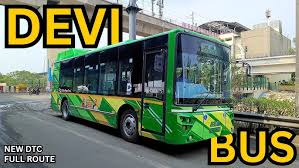
The Delhi Government has launched the DEVi (Delhi Electric Vehicle Interchange) initiative, introducing 255 electric buses built by PMI Electro Mobility and JBM Auto as part of a larger push to electrify the city’s public transport.
Delhi Transport Minister Pankaj Singh met the high-level delegation from Oslo, Norway, to study the capital’s community-based DEVI electric bus service.
Singh said the Delhi government is targeting a 100% electric public bus fleet by 2026 and will also prioritise zero-emission school buses, waste trucks, and construction machinery during air-quality emergencies
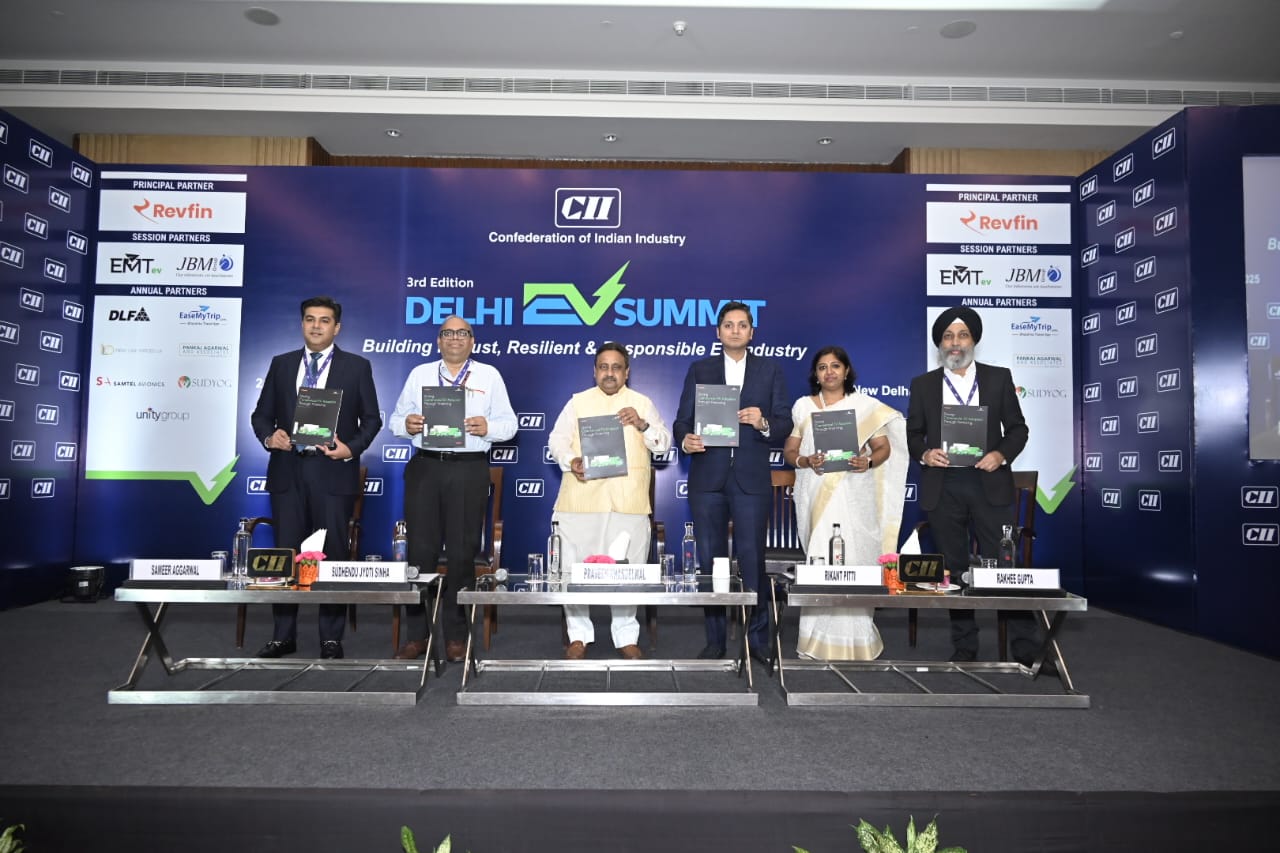
Delhi’s push is reshaping local livelihoods. According to CII, EVs account for 18% of new registrations in the capital, and more than 20,000 green jobs have been created in charging and maintenance. “Delhi has shown that policy and infrastructure can generate both adoption and employment,” said Rikant Pitti, chairman of CII Delhi State at the recently held Delhi EV Summit.

Various issues including EV financing which remains a sticking point were discussed.. “EV adoption cannot be achieved without affordable financing,” said MP Praveen Khandelwal, releasing a new report on Driving Commercial EV Adoption through Financing. Produced by Revfin, Green Frontier Capital, and Redseer.
The study outlines credit and leasing models tailored to small fleet operators.
Delhi’s forthcoming EV Policy 2.0, described by NITI Aayog as the fastest-acting in the country, will seek to address those barriers while extending the city’s lead in adoption.
Long an urban battleground for air pollution, the Indian capital is now a living laboratory for electric mobility, positioning itself as a test case for the nation and a model for cities worldwide seeking cleaner transport pathways
Strong state-level policy support has been central to this shift. The Delhi Electric Vehicle Policy, which is among the most comprehensive in the country, offers generous buyer incentives, prioritises pollution reduction, and has aggressively targeted electrification of commercial fleets.
Combined with an extensive charging network, relatively lower population density that allows more room for infrastructure, and decisive pushes in three-wheeler adoption, the city has fostered one of the highest EV penetration rates in India.
For now, Delhi is both a domestic test case and a global reference point, where buses, scooters, and rickshaws are already going electric, jobs are being created, and policies are being watched as far away as Scandinavian shores..