

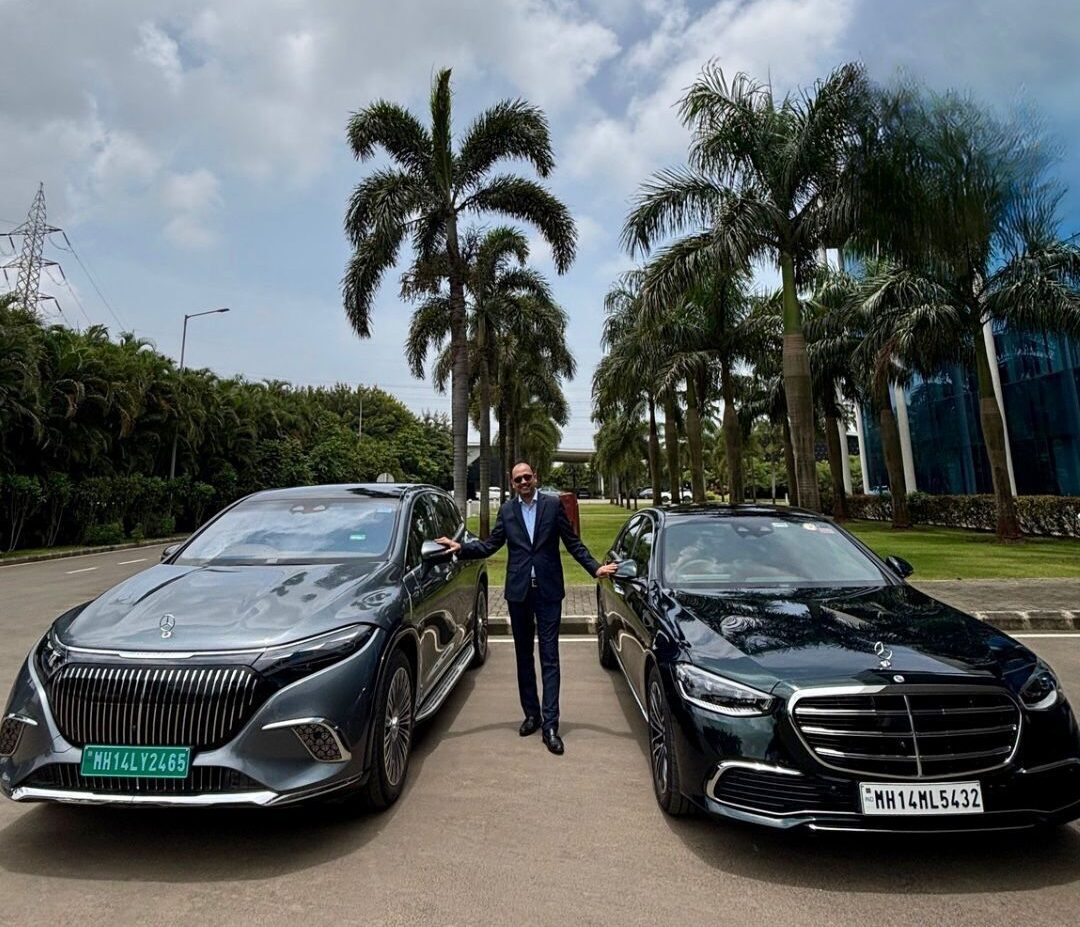
Mumbai-Pune, August 28th, 2025: For Santosh Iyer, Managing Director of Mercedes-Benz India, the story of mobility isn’t just corporate strategy; it starts at home, as he lives the EV-ICE transition every day.
From the tech-savvy EQS in his garage to the timeless S-Class, he represents a multi-fuel future in which innovation meets heritage and customers have the freedom to choose their own journey.
“The EQS taught me how seamlessly an EV could slot into daily life; the S-Class reminded me of the enduring appeal of traditional luxury,” says Iyer.
Living both, Iyer exemplifies how the auto industry is navigating a dual-powertrain reality, delivering excellence whether customers choose electric or combustion.
“I am not choosing one over the other; I am experiencing both, just like our customers,” he says, adding, “Two years ago, I transitioned to a BEV with curiosity rather than apprehension.” Living with the EQS was a revelation; it reshaped my perspective on mobility and became a transformative learning experience,” he recalls.
It meant seeing the ultra-long-range EQS and, later, the opulent EQS Maybach SUV transform his regular Pune-Mumbai commutes into smooth, anxiety-free rides.
He adds, “For my kids, the EQS was more than a car; it was a tech-savvy playmate. Generation Alpha truly connects with EVs, and their compassion for the planet is inspiring.”
Nonetheless, after two years of living electric, Iyer has returned — albeit temporarily — to the comfort of an internal combustion engine.
And what better way to accomplish this, he claims, than with the “best car in the world”, the Mercedes-Benz S-Class?
“The S-Class isn’t just a car. It’s a haven of modern luxury, a tribute to craftsmanship, and a symbol of timeless elegance. It embodies everything Mercedes-Benz stands for,” he explains.
A dual strategy for a dual customer
That straddling of two worlds, futuristic EVs and timeless ICE sedans, is not limited to Iyer’s personal experience. It reflects Mercedes-Benz India’s strategic decisions in one of its fastest-growing luxury markets.
The company now leads India’s luxury EV market with the EQS, EQE SUV, and EQB, but it continues to sell more ICE vehicles than ever before.
“Our approach is simple: the customer chooses the powertrain, and we are ready with all options,” says Iyer. While the EQS has become a symbol of forward-thinking mobility, the S-Class continues to define modern luxury in India, where many buyers regard it as the pinnacle of success.
Mercedes-Benz India has thus established itself as a portfolio player rather than an EV evangelist. Its priority is to deliver excellence across all powertrains, recognising that aspiration, infrastructure, and consumer psychology do not move in tandem.
Industry recalibrations
This nuanced approach reflects broader industry recalibrations. Automakers like Ford, GM, Volkswagen, and Toyota have tempered their earlier all-electric ambitions in recent years, favouring a mix of electric innovation and combustion refinement instead.
Luxury brands such as Jaguar Land Rover and Volvo have also slowed EV adoption, citing patchy charging infrastructure, cost concerns, and uneven demand growth.
What appeared to be an unavoidable sprint towards electric ubiquity is now a marathon through various paths.
India’s multi-fuel reality
Luxury consumers are more experimental with EVs but still uphold combustion flagship models as anchors of status and enjoyment. “Whether electric or combustion, Mercedes-Benz delivers excellence,” Iyer adds.
For many affluent buyers, EVs serve as tech-forward secondary vehicles, whereas ICE sedans and SUVs are valued for their heritage and allure.
Closing the loop
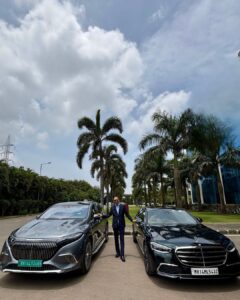
The ICE flagship is not a fallback but a milestone in aspiration, reinforced by a farewell note from a boss in 1999 that promised Iyer he would one day drive a Mercedes-Benz S-Class.
More broadly, his story mirrors the industry reality: automakers are navigating the EV-ICE transition, embracing both worlds, and offering consumers the freedom to choose between emerging electric technology and the enduring appeal of combustion engines.
Santosh Iyer’s decisions, from his garage to the boardroom, are more than just a career arc. It’s a lens into the future of mobility in India. “
“Luxury, performance, and sustainability don’t have to be at odds,” he says. “The real challenge and the real excitement lie in blending them seamlessly” in a landscape where innovation and heritage coexist.
Under his stewardship, Mercedes India is not just selling cars; it is shaping perceptions, building infrastructure, and nudging a market toward cleaner, smarter mobility.
In the end, Iyer’s story mirrors that of India’s luxury automotive landscape itself: a careful balance between tradition and innovation, legacy and vision, the combustion engine and the electric motor. And like any good journey, it starts with a garage, but it doesn’t end there.