

New Delhi, January 23, 2026: India’s $35 billion automobile industry is bracing for a significant transformation as the much-anticipated India-European Union free trade agreement approaches finalization this week. European Commission President Ursula von der Leyen and European Council President António Costa are attending Republic Day festivities in the capital.
While much public attention has centered on whether the pact will ease India’s high import duties on cars, industry executives believe the deal’s real impact will be more complex and long-lasting. Although passenger vehicle imports may still be closely regulated, electric vehicle supply chains and auto components are set to benefit early on, potentially reshaping India’s electric vehicle (EV) strategy.
Premium Cars Get a Head Start
Negotiators are expected to adopt a familiar approach: protecting small and mass-market vehicles while offering gradual tariff reductions for premium and electric models, similar to India’s recent trade deal with the U.K. This framework would primarily advantage European luxury car manufacturers like BMW and Mercedes-Benz, which view India as a small but rapidly growing market.
Even modest tariff reductions could significantly change the pricing dynamics for upscale imports, accelerating the premiumization of India’s automotive market. However, this could also disrupt domestic initiatives aimed at establishing a local EV manufacturing base.
“EV tariffs don’t need to drop dramatically to influence investment decisions,” remarked an auto executive closely following the negotiations. “For premium brands, predictability is as important as price.”
An EV Incentive Program on Hold
This tension is already reflected in the fate of India’s Scheme to Promote Manufacturing of Electric Passenger Cars, which offered import duties as low as 15% on high-value EVs, conditional upon automakers investing ₹4,150 crore locally and setting up manufacturing facilities.
When the scheme closed in 2025, it received no applications.
Executives conjecture that European automakers chose to wait for clarity from the India-EU trade discussions rather than committing to factory investments. With the free trade agreement nearing completion, some policymakers are concerned that companies might decide to import EVs at the almost 15% duty levels instead of manufacturing locally—at least for the time being.
This concern has led the government to contemplate adjusting the scheme to align it with trade commitments. However, relaxing localization requirements could undermine domestic EV leaders such as Tata Motors and Mahindra & Mahindra, particularly as they ramp up production under a protected environment.
The result may be intensified competition in the premium EV sector and renewed debate over how much protection India is willing to exchange for access to technology.
Components Take Center Stage
If vehicle imports remain politically sensitive, auto components are emerging as the clear beneficiaries of the India-EU deal.
The European Automobile Manufacturers’ Association (ACEA) has called for full tariff elimination on auto parts, warning that quotas, licensing rules, and safeguard mechanisms could otherwise make the benefits of the FTA “difficult to access.” Components face fewer political obstacles and align well with the industrial priorities of both sides.
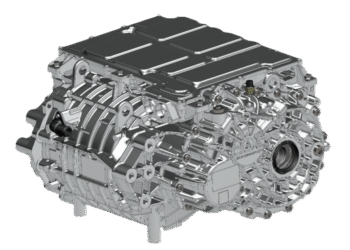
European automakers and suppliers already operating in India are expected to increase local sourcing to comply with rules-of-origin requirements, directing demand toward India’s cost-effective ancillary sector. Companies specializing in EV batteries, power electronics, wiring systems, and automotive software stand to gain the most.
“Finished vehicles are always a contentious issue,” noted an individual familiar with ACEA’s submissions. “Components are where scalability, partnerships, and technology transfer truly take place.”
India’s Quiet EV Export Ambition
For Indian ancillary manufacturers, the deal could accelerate a long-held ambition: to become a global hub for EV components, even if exports of complete vehicles remain limited in the short term.
Battery manufacturers, chassis suppliers, thermal management firms, and charging infrastructure providers are well-positioned to benefit from improved access to the EU market and joint development programs. India’s expanding engineering talent pool also establishes it as an attractive base for EV design and research and development, without raising fears of a surge in imports.
European original equipment manufacturers (OEMs), including BMW and Hyundai’s European divisions, are already exploring deeper supplier collaborations in India, as executives aim to lower costs and diversify supply chains during this capital-intensive transition to electric vehicles.
Government officials state that any revival of the EV manufacturing incentive scheme will continue to prioritize local production, even as international trade obligations are fulfilled. ACEA director-general Jonathan O’Riordan has advocated for long-term quotas and gradual liberalization, tailored to India’s growth trajectory instead of short-term import spikes.
Trade Meets Carbon Challenges
The timing of the India-EU deal introduces another layer of complexity. With renewed tariff threats from the U.S. under President Donald Trump and broader international trade uncertainties, the implications of this agreement are significant.
However, for EVs and auto parts, the agreement redraws the long-term map. It nudges Europe towards India as a sourcing and engineering base, challenges domestic EV champions to compete beyond tariff walls, and signals that the next phase of India’s auto story will be shaped equally by supply chains and standards.