

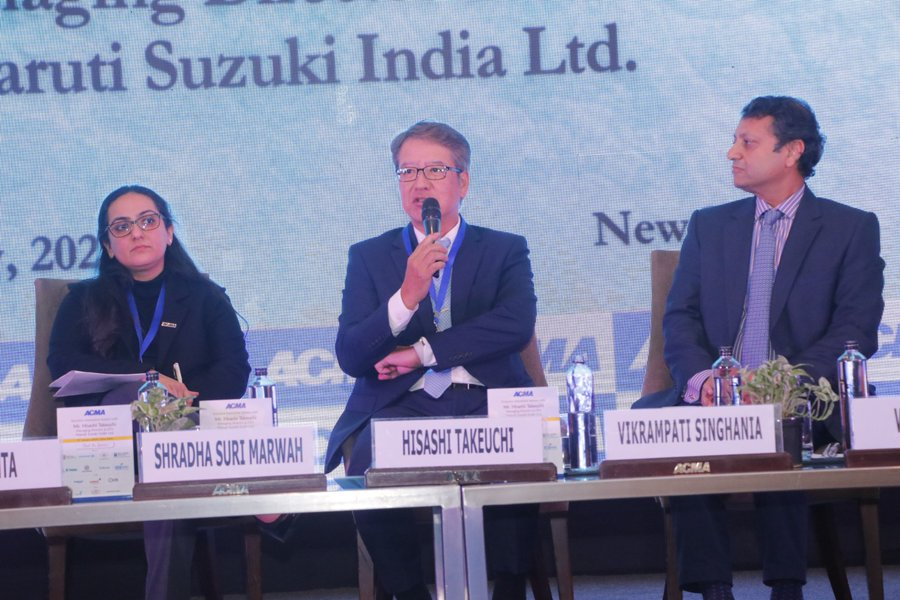
NEW DELHI, 12th September 2025: India’s automotive component industry is at a transformative crossroads, facing global supply chain disruptions and rising trade tariffs. This situation positions the country for potential leadership and innovation on the world stage.
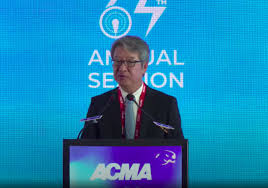
During the ACMA 2025 annual session in New Delhi, Maruti Suzuki Managing Director and CEO Hisashi Takeuchi shared a bold vision for India’s evolution into a resilient and trusted hub within the global automotive value chain.
Global Supply Chains Under Strain
“Supply chains are the silent lifelines of the global economy,” Takeuchi noted, reflecting on the recent shocks—ranging from pandemic-induced border closures and energy flow disruptions to geopolitical conflicts and protracted trade tensions—that have impacted logistics worldwide.
Nearly 30% of India’s auto component exports are headed for the U.S., and about half of these exports currently face tariffs between 25% and 50%. This poses a significant challenge that the government is actively addressing.
 Turning Crisis Into Opportunity
Referencing Prime Minister Narendra Modi’s motto, “Aapda mei Avsar” (opportunity in adversity), Takeuchi suggested that this tumultuous period offers India a unique chance to reshape its industrial future. He highlighted the historical trajectories of economic powerhouses—from U.S. industrialization to Europe’s post-war recovery, Japan and the Asian Tigers’ technological development, and China’s factory dominance—and asserted that the coming decades will belong to India.
India’s Competitive Edge
India possesses significant advantages: the world’s largest working-age population, a rapidly expanding $4 trillion economy, and robust governmental initiatives like the Production Linked Incentive (PLI), Make in India, and Atmanirbhar Bharat. Above all, he praised the “spirit of resilience” and “deep sense of innovation” within India’s workforce.
Rising Auto Exports and EV Leadership
The Indian auto industry is a high performer, currently ranking as the world’s third-largest automobile market. Auto component exports reached $23 billion in the financial year 2024-25, with projections to more than double by 2030. India is also gaining global recognition as a hub for electric vehicle manufacturing, showcased by Suzuki Motor Corporation’s launch of the e-VITARA—India’s first global EV export, inaugurated by Prime Minister Modi and set to reach over 100 countries.
Strategic Intent and Value Chain Advancement
Takeuchi emphasized the need for diversification to reduce reliance on any single market and highlighted strides made in localization, including the recent launch of hybrid battery electrode production. He urged industry leaders to embrace “strategic intent,” a concept introduced by management guru C.K. Prahalad. This encourages companies to transcend their current limitations, invest in research and development (R&D), and adopt continuous improvement (Kaizen) to move from component suppliers to module manufacturers, eventually evolving into world-class global leaders.
Lessons From Japan’s Industrial Miracle
 Drawing on the lessons from Japan’s post-war industrial miracle, Takeuchi stressed the importance of viewing employees as partners, deeply understanding customer needs, and upholding environmental responsibility through efficient business practices. He pointed to stable and predictable policies, collaborative government-industry engagement, and support for exports and skills development as essential foundations for sustained competitiveness.
A Call to Action for India’s Auto Industry
He challenged companies to assess their current maturity level and expedite their advancement along the value chain. “If we combine strategic intent with India’s unique advantages—domestic demand, talent, and policy support—the growth possibilities are limitless,” Takeuchi stated. “It is our responsibility, as an industry, to invest in R&D, treat our people as partners, and build companies of global scale. By doing so, India will not only be Atmanirbhar; it will become the world’s trusted partner in the automotive supply chain, and together, we will work towards the vision of a Viksit Bharat.”