

PUNE: 24th August 2025: Prime Minister Narendra Modi recently announced India’s goal to export electric vehicles (EVs) to more than 100 countries, marking not just a vision but a significant shift in the country’s approach. India’s journey toward clean mobility has transformed from a domestic initiative into a global mission.
Dr Atul R. Thakare, a seasoned automotive analyst and deputy general manager of business development and corporate planning at the Automotive Research Association of India (ARAI)—the country’s leading automotive testing and research institute—cautions that EVs “are not a silver bullet” for India’s intersecting transport, energy, and environmental challenges. However, he emphasises that they remain “the most practical and scalable tool” to accelerate India’s transition to sustainable mobility.
“This is not just about ambition; it’s about inevitability,” Dr Thakare shared his views during an interview for EV Story’s Change for Progress series.
India faces acute mobility challenges. Its cities are plagued by some of the world’s worst air pollution, and the country heavily depends on imported oil, with traffic congestion worsening daily. Meanwhile, millions are aspiring to personal mobility. EVs offer solutions to these issues by promising lower emissions, reduced fuel costs, and enhanced energy security.
“EVs embody a unique convergence of economic, environmental, and social benefits,” says Dr. Thakare. “The question isn’t whether EVs are sustainable today, but whether India is prepared to develop the complete ecosystem, charging infrastructure, renewable energy integration, and recycling innovation—that will make them unequivocally sustainable in the future.”
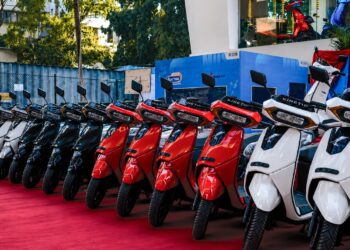
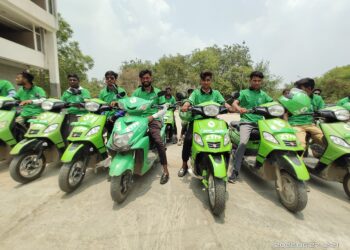
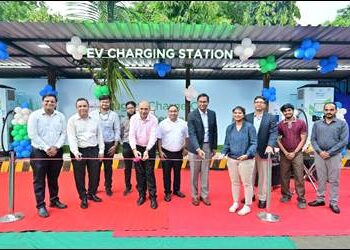
The EV ecosystem is gradually taking shape. E-rickshaws are now common in smaller towns, while electric two-wheelers are gaining popularity in metropolitan areas. However, structural challenges persist: limited charging networks, high battery costs, and underdeveloped recycling infrastructure. Government initiatives like FAME-II and state-level mandates have laid the groundwork, while industry experiments with battery swapping, leasing models, and localising supply chains show promise.

Dr Thakare insists, “Cleaner, smarter mobility is no longer an aspiration—it’s a necessity. The pace at which supporting ecosystems develop will determine when this inevitability becomes a reality.”
History teaches us that energy transitions are rarely smooth. The oil crises of the 1970s demonstrated that efficiency, not just increased supply, defines success. EVs embody that lesson; they convert over 80% of consumed energy into usable power, compared to 20–25% in conventional engines. Thus, efficiency is key to sustainability.
Critics often point to challenges related to mineral sourcing, manufacturing emissions, and battery disposal. However, dismissing EVs for these reasons overlooks a larger truth: EVs have demonstrated their commercial viability.
Their scalability, combined with rapid technological advancement, provides them with a significant advantage
 “EVs aren’t perfect,” Dr Thakare acknowledges. “But they represent the closest scalable solution. The transition requires responsible management, but delay is no longer an option.”
From Pune to Chennai, India’s automotive hubs and growing gigafactory network position the country as a competitive global supplier of affordable EVs, especially for emerging markets.
India’s EV trajectory is clear. Electrification is reshaping personal mobility through two-wheelers and compact cars, while electric buses and last-mile fleets are steadily transforming public transport. Industrial mobility is still catching up, contingent on advancements in charging and battery technologies.
Ultimately, vehicle adoption depends not only on the hardware but also on the surrounding ecosystem: charging infrastructure, innovative financing, renewable energy integration, and sustainable recycling.
India stands at a historic crossroads. Cleaner, smarter transport is no longer just an aspiration—it is inevitable. As Dr Thakare concludes, “In India’s mobility story, EVs are the most effective and scalable tool we have to drive the future.”
About Dr Atul R. Thakare: Dr. Atul R. Thakare is a veteran automotive analyst and strategist with over two decades of diverse experience in business development, project management, and innovation within the automotive sector. He serves as the Deputy General Manager of Business Development and Corporate Planning at the Automotive Research Association of India (ARAI), the country’s premier automotive testing and research institute under the Ministry of Heavy Industries.
With deep expertise that bridges technology, policy, and industry, Dr. Thakare has played a crucial role in advancing India’s clean mobility initiatives. His leadership at ARAI focuses on preparing the ecosystem for electric vehicles, driving innovation in sustainable transport, and positioning India as a competitive player in the global EV market.