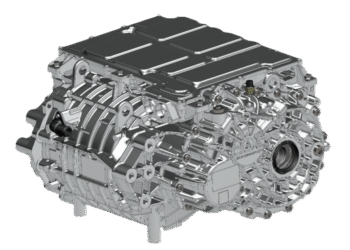



As India accelerates its transition to electric mobility, a hidden vulnerability threatens its progress, the country’s near-total dependence on imported rare earth magnets. These critical components, especially neodymium–iron–boron (NdFeB) magnets, are essential for electric vehicle (EV) motors, clean energy technologies, and advanced manufacturing. Yet India currently manufactures none. Primus Partners, in its latest report From Extraction to Innovation: A Blueprint for Enhancing Rare Earth Magnet Ecosystem in India’s EV Roadmap, warns that failing to localise the neodymium–iron–boron magnet supply chain could derail India’s electric vehicle revolution. The report positions these magnets not just as industrial inputs, but as the backbone of a sustainable, self-reliant EV economy.
The report presents a comprehensive five-pillar blueprint to build an end-to-end rare earth magnet ecosystem — from mining and refining to manufacturing and innovation. With EV demand set to surge, and India targeting 30% penetration by 2030, building domestic capacity for magnet production is no longer optional.
India holds the fifth-largest rare earth reserves globally, with over 13.07 million tonnes of monazite, a key source of neodymium and praseodymium. Despite this, India is completely dependent on imports — over 90% of which come from China, which controls 92% of global magnet manufacturing. This dominance poses both strategic and economic risks. In recent months, export restrictions and customs delays in China disrupted supplies to over 20 Indian companies, including leading auto component manufacturers.
The domestic opportunity, however, is massive. NdFeB magnet demand in India is expected to reach 7,150 tonnes annually by 2030, driven by high-growth segments like two-wheeler EVs, which alone could require between 20,500 and 44,000 tonnes of magnets by 2047. The domestic market could reach ₹7,295 crore by the end of this decade.
Primus Strategy to enhance rare earth magnet ecosystem
Primus recommends stabilising the market through government-backed price guarantees and long-term offtake agreements with anchor industries. It urges the creation of pilot magnet clusters in mineral-rich states such as Odisha, Andhra Pradesh, and Tamil Nadu. These hubs would integrate mining, processing, and magnet-making while scaling up at least three industrial champions to serve the global NdFeB magnet market, projected at 131 kilotonnes by 2030.
Upstream expansion is another priority. The report suggests scaling Indian Rare Earths Limited’s (IREL) current capacity of 1,500 tonnes per year for neodymium–praseodymium oxide and creating a strategic magnet reserve to ensure at least six months of supply for critical sectors.
To support long-term innovation, the report calls for the launch of a National Rare Earth Innovation Hub focused on research, recycling, and advanced magnet grades. Recycling alone could fulfil 35–40 kilotonnes of global demand by 2030. Additionally, a Magnet Ecosystem Coordination Cell is proposed to align ministries, accelerate clearances, and track execution. The window for global leadership is short — only three to five years — and requires urgent alignment.
Davinder Sandhu, Co-Founder and Chairperson, Primus Partners, said, “India has both the reserves and the demand. Yet despite holding the 5th largest rare earth reserves, we account for less than 1% of global magnet production. The INR 34,300 crore outlay under the Critical Minerals Mission is a strong start, but we can’t afford to remain resource-rich and capacity-poor. China spent decades building its dominance; India doesn’t have that luxury. We must compress that journey through bold investments in technology, fast-tracked clearances, and strong industry–research partnerships to scale extraction, processing, and recycling.”
Nikhil Dhaka, Vice President, Primus Partners, added, “The mines-to-magnet gap is real, but so is the opportunity. A single EV can have more than 25 components that rely on magnets, and India’s two-wheeler EV segment alone will require between 20,500 and 44,000 tonnes by 2047. As the sustainable mobility sector accelerates, we need a national effort to de-risk EV manufacturing at its core. Without urgent localisation, technology innovation, faster approvals, and strong private-sector partnerships, every vehicle we build will carry the same import dependence we face today.”
Road ahead to EV revolution in India
India’s electric vehicle journey is more than a climate imperative, it is an economic opportunity. With the right policies, private sector leadership, and strong partnerships, the nation can become a magnet powerhouse and lead the global mobility shift from the front. The road ahead demands urgency, innovation, and deep collaboration between government, private players, and research institutions. If India rises to the challenge, it won’t just reduce its import dependence — it will become the engine of sustainable mobility for the world.