

NEW DELHI, 7th September 2025:VinFast, Vietnam’s electric vehicle maker, is urging Indian policymakers to recognise its ₹16,000-crore ($1.9 billion) investment in Tamil Nadu under the country’s new EV policy, the Scheme to Promote Manufacturing of Electric Passenger Cars in India (SPECMI), which allows for up to ₹6,484 crore in duty relief per applicant.
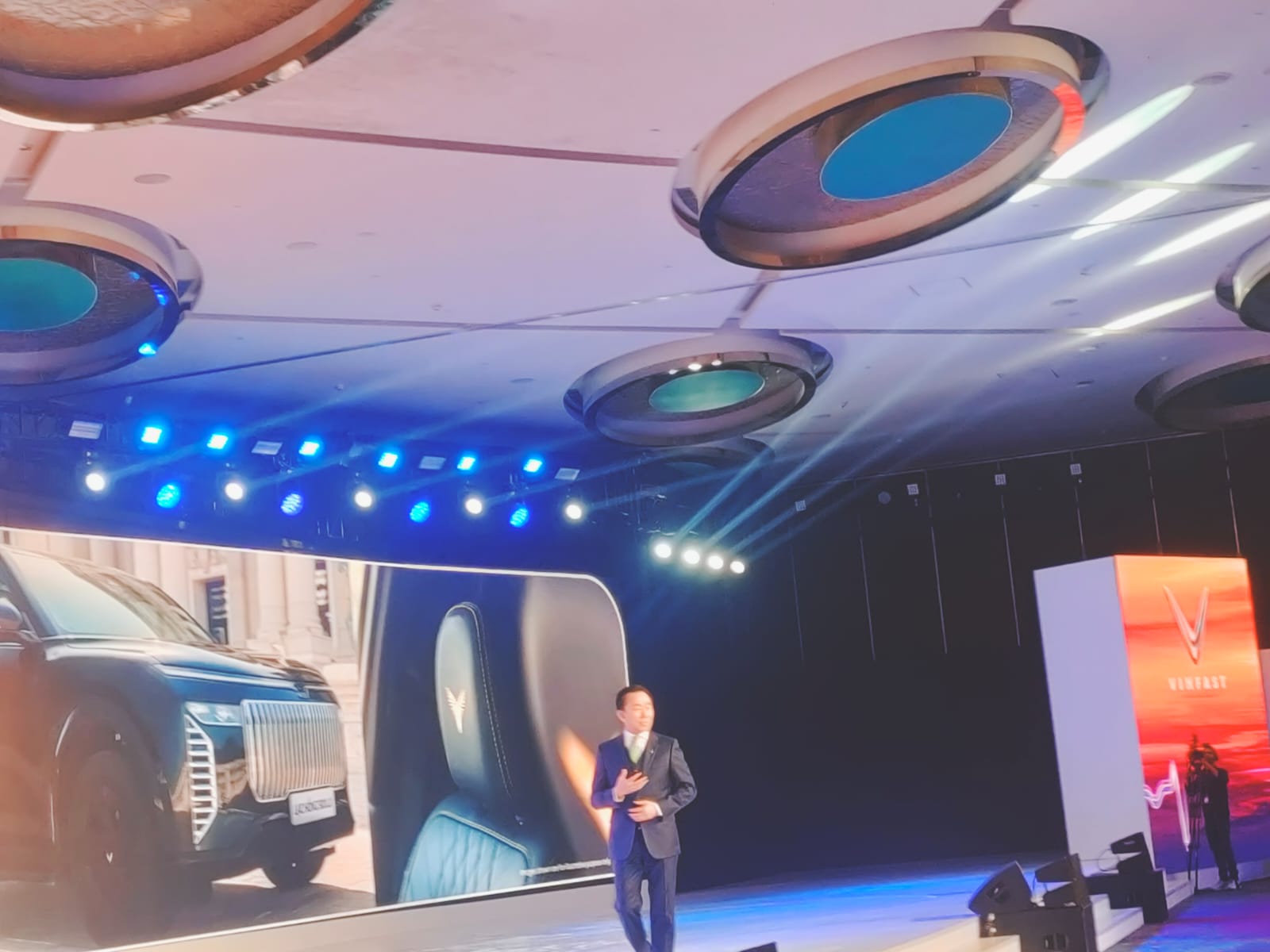
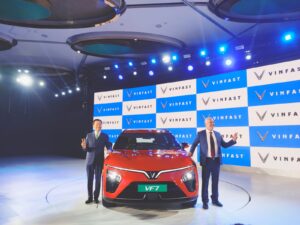
On the sidelines of the VF6 and VF7 launch in Delhi, VinFast’s management highlighted the government’s hesitation to acknowledge its substantial investment, which does not fit into the existing policy. The company management said that “early movers should be rewarded for actual on-ground commitments rather than disadvantaged by bureaucratic timelines.”
“I would request the policymakers to consider VinFast’s investment ahead of the government’s plan as part of the benefits promised to global investors under the new EV policy,” said Pham Sanh Chau, CEO of VinFast Asia.
Thoothukudi Plant and ₹16,000-Crore Multi-Phase Plan
VinFast signed a memorandum of understanding with the Tamil Nadu government in January 2024 to set up a manufacturing plant at Thoothukudi. The first phase of investment is ₹4,000 crore, of which ₹2,000 crore has already been spent.
The plant is expected to employ more than 3,000 people directly once operational. The full ₹16,000-crore plan spans multiple phases, covering passenger vehicles, two- and three-wheelers, buses, charging infrastructure, and fleet solutions.

Two months after VinFast’s commitment, the Union Ministry of Heavy Industries unveiled SPECMI, offering reduced import duties and other benefits to global EV makers investing at least ₹4,150 crore and meeting localisation norms. While VinFast meets these thresholds, the government has yet to consider its early investment because it was made before the policy came into effect.
“When we were planning to invest in India, we were even involved in developing the draft policy. But once we invested, the government should have taken our early commitment into account. VinFast is one of the few players worldwide not only committing funds but also planning to bring in much more, from electric two- and three-wheelers to buses and taxis, supported by batteries, charging, and fleet management solutions from our group companies,” Chau added.
Beyond Cars: Green City, Charging, and Fleet
VinFast says it has gone above and beyond the policy guidelines, yet it hasn’t been included among the incentives offered to other global automakers. Chau said VinFast aims to replicate its Vietnam model by bringing in group entities such as VinES (batteries), V-Green (charging infrastructure), and FGF (used EVs, leasing, and retrofitting).
The company is also planning a green city project spanning 2,000 acres, bringing the full VinGreen Group ecosystem to India. Discussions are ongoing with the governments of Andhra Pradesh, Telangana, and Tamil Nadu. Chief Minister M.K. Stalin has already invited VinFast to expand the ecosystem in Tamil Nadu.
Fleet Expansion: Seven-Seater EVs
Fleet operations are a key pillar of VinFast’s India strategy. Chau said the company’s mobility arm, GSM, will roll out a fleet management business where drivers can buy vehicles financed by VinFast and repay EMIs from their earnings on the platform. The fleet vehicle for India will most likely be a seven-seater, designed for ride-hailing and shuttle services. These vehicles will have fewer premium features than the passenger lineup to remain affordable and accessible.
“We have come here with a long-term vision for local manufacturing, a dealer and workshop network, and a charging station network. We don’t just want to sell cars but build the whole infrastructure,” Chau said. “Eventually, we would want to get into electric buses and vehicles for public transport as well.”
Production, Localisation, and Regulatory Challenges
At Thoothukudi, VinFast is currently assembling completely knocked-down kits, with plans to scale production from 50,000 units to 150,000 annually over the next two to three years. The company aims to increase localisation to 70–80% as its supplier base matures. Chau said major component makers such as Minda Group have committed to shifting capacity to Tamil Nadu, while other vendors are in talks to join. Even Vietnamese suppliers of rare earth materials and other components are being encouraged to expand into India.
Regulatory bottlenecks remain a concern. About 2,500 components require Bureau of Indian Standards (BIS) certification, but only around 500 have been cleared so far.
“Certification is taking 8–9 months. We need it reduced to under three months to ramp up production,” Chau said. “I hope the central government will support us in smoothing the process of getting BIS approvals.”
Premium Positioning and Product Roadmap
In terms of product strategy, VinFast plans to establish itself as a premium EV brand with the VF6 and VF7 before moving into more accessible models such as the compact VF3.
“Our positioning is premium; that’s why we launched VF7 and VF6,” Chau said. “We want India to see us as a premium car producer, not a low-end one. Once customers recognise our quality, we will bring more accessible models like VF3. But even then, we don’t want to be seen as only a budget car maker.”
The company is also open to producing pickup trucks, e-buses of various lengths, and two-wheelers; it already has more than nine EV two-wheeler models globally
Call for Retrospective Incentives
VinFast is pressing for companies that have already broken ground and committed capital, not just announced plans, to automatically qualify for incentives, even retrospectively. The company says it is looking to New Delhi to reward those actively building India’s electric-vehicle ecosystem, reflecting the same ambition and commitment VinFast is demonstrating on the ground.