

KOLKATTA – 22nd August 2025:India’s electric-vehicle story is often told through rising sales charts, glossy launches, and subsidy-driven milestones, says Chandan Mallik, Managing Editor (Automotive & Technology) at Prime Auto India.
Contributing to EV Story’s special “Change for Progress” series, he emphasises that the real challenge now isn’t simply selling more electric vehicles. He informs that India must build the invisible foundations of chargers, recycling plants, mineral supply chains, and a skilled workforce if it is to become a global EV powerhouse rather than a volume-driven assembler reliant on imports.

“Think of it this way,” Mallik says, “subsidies helped kick-start the market, but you can’t drive on empty roads forever. The real work begins with infrastructure.”
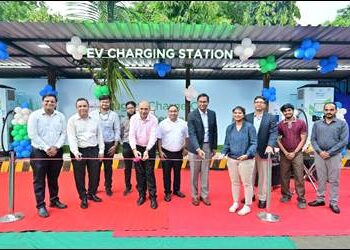
Charging remains the most visible gap. India has about 25,000 public charging stations today — a respectable start, but nowhere near the hundreds of thousands needed by the decade’s end. Fast-charging corridors on highways and logistics hubs are vital if fleets and intercity travellers are to make the switch. Reliability and interoperability matter just as much as numbers. Drivers don’t want to gamble on whether a charger is working or juggle five different apps just to pay.
Battery recycling is another fault line. New rules put the onus on manufacturers to collect and recycle used batteries, embedding digital tagging and producer responsibility. But real-world capacity is still scarce. Mallik cautions that unless India scales this quickly, it risks shipping valuable battery waste abroad instead of recovering nickel, cobalt, and lithium at home, resources that could ease import dependence and lower costs.
Minerals, in fact, may be the toughest test. India is only beginning to map its reserves and forge global partnerships under its Critical Minerals Mission. Processing capacity takes years to build, and for now, India will remain import-reliant. Recycling, again, is one way to bridge the gap.
Jobs are the other big piece. EVs create demand for new roles, from charger technicians to battery engineers, but the workforce isn’t ready in the numbers required. ICE-era jobs are shifting, but the skill sets don’t always transfer neatly. “The sector needs apprenticeships, certification programs, and much closer collaboration between industry and training institutes,” Mallik argues.
Policy is moving in the right direction, blending demand incentives with recycling mandates and supply-side pushes like the PLI scheme. Private capital is flowing into chargers, gigafactories, and recycling startups. But execution will be decisive. As Mallik notes, “India has drawn the blueprints of a self-sustaining EV ecosystem. The next step is translating those blueprints into hard infrastructure, at scale.”
For him, the recommendations are clear: build out fast-charging corridors, enforce recycling mandates, scale up skilling, and accelerate exploration of domestic mineral resources. The EV transition, he reminds us, isn’t just about adding more electric vehicles on the road. It’s about whether India can put in place the scaffolding that makes clean mobility sustainable, competitive, and job-creating for decades to come.
(Chandan Mallik is Managing Editor (Automotive & Technology) at PRIME AUTO INDIA. He tracks the intersection of mobility, energy, and manufacturing and has spent more than two decades covering the auto industry. His writing focuses on electrification, emerging technologies, and the policies reshaping India’s transportation future.)