

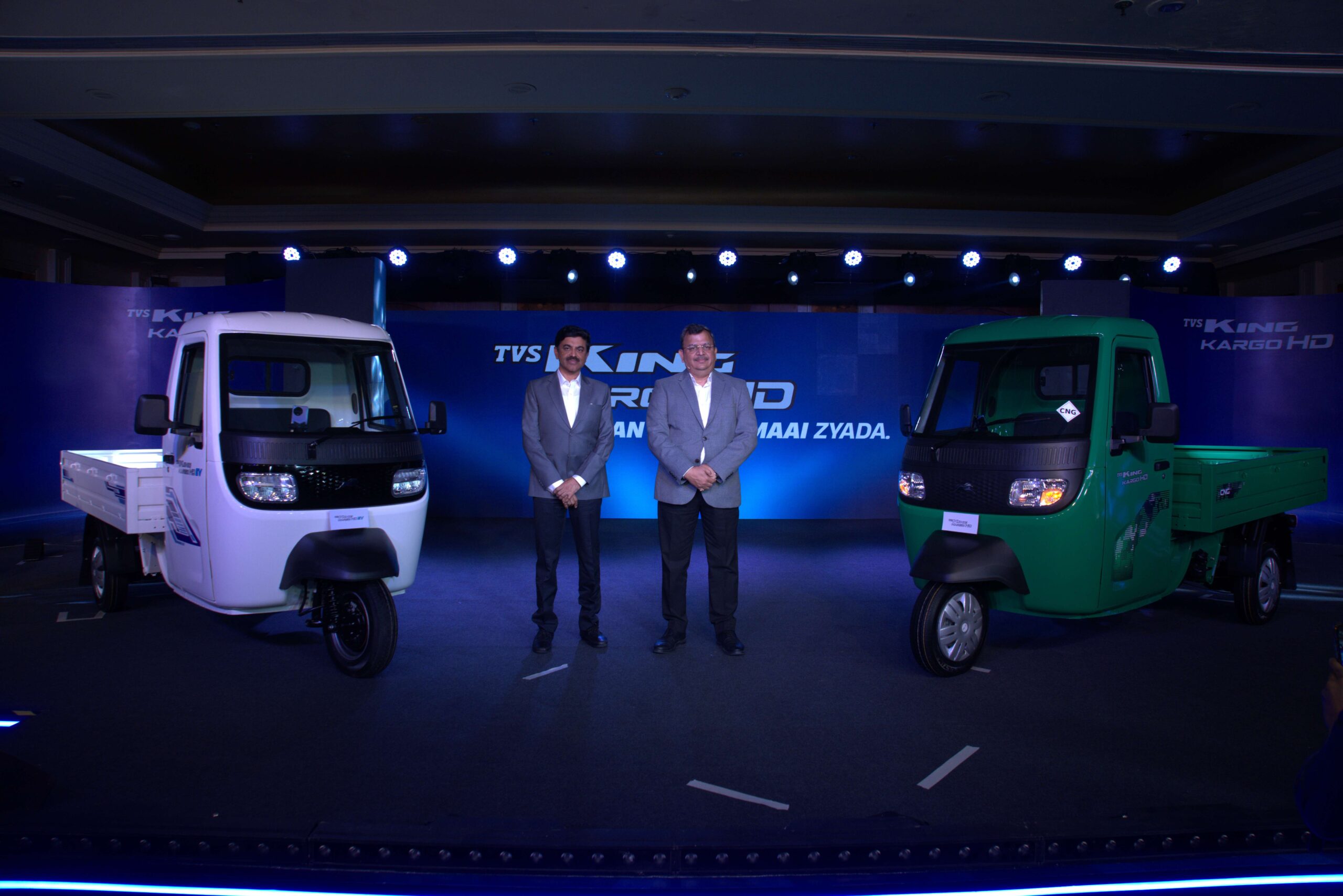
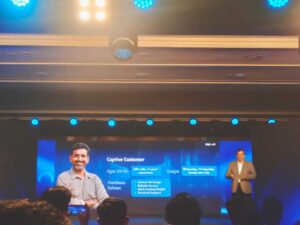
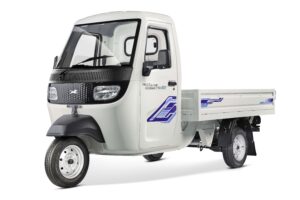
NEW DELHI: 22nd August 2025:TVS Motor Company is signalling bigger ambitions in India’s electric mobility race with the launch of its King Kargo HD EV, its first electric cargo three-wheeler. At the event, Executive Vice President Rajat Gupta said, “We have kept all our options open in the electric three-wheeler market. The overall market will continue to grow, and we expect that by 2030, 60% of it will consist of electric vehicles.”
That leaves the door open for a move into e-rickshaws, a segment dominated by Mahindra and where Bajaj Auto is preparing an aggressive entry.
“The e-rickshaw market is highly disorganised; however, we are watching it closely,” Gupta added, stating TVS’s intent to expand beyond cargo EVs into India’s largest and most fragmented electric vehicle category.
The country’s three-wheeler market is electrifying at breakneck pace. In FY25, electric L5 vehicles accounted for 160,000 of the 720,000 sold, pushing EV penetration to 23%.
Passenger models made up more than 80% of this, though cargo adoption is rising fast.
Adding L3 e-rickshaws into the mix, penetration jumps past 50%, with about 700,000 units registered last year—making India the world’s largest electric three-wheeler market.
Analysts say a player like TVS could help professionalise the unorganised e-rickshaw space by bringing in structured financing, stronger after-sales networks, and higher-quality vehicles. The company is already in advanced talks with fleet operators and exploring leasing models for both passenger and cargo EVs, moves that could lower acquisition costs and reduce the dependence on informal credit.
TVS’s initial push is aimed at cargo fleets serving India’s e-commerce boom and last-mile logistics in tier-2 and tier-3 cities. Government policy remains a key tailwind. While organised L5 EVs qualify for subsidies under the PM E-Drive scheme (₹2,500 per kWh, capped at ₹25,000 per vehicle), most L3 e-rickshaws miss out due to smaller batteries and limited speeds.
On the supply side, TVS, along with Bajaj and Mahindra, also benefits from the Auto PLI scheme, which analysts say gives large OEMs a structural edge as subsidies for buyers are phased out.
“The market currently relies on subsidies. We will have to wait and see. Many still believe acquisition costs are high. However, when these subsidies are phased out, everyone will need to be prepared,” Gupta said, stating that the newly launched King Cargo HD EV is compliant with both of the government’s incentive schemes, PM E Drive and PLI Auto.
With demand incentives set to expire later this year, consolidation is expected to accelerate, potentially squeezing the small assemblers who dominate e-rickshaw production.
Mahindra Last Mile Mobility and Bajaj Auto lead the L5 segment today, while Piaggio, Atul Auto, Omega Seiki, Euler, and Murugappa’s Montra are scaling quickly. As a latecomer, TVS is betting on both passenger and cargo formats, while e-rickshaws remain on its radar. With pilot programs also underway outside India, the company has bold ambitions well beyond a single product launch—positioning itself as a heavyweight contender in India’s EV transition.