

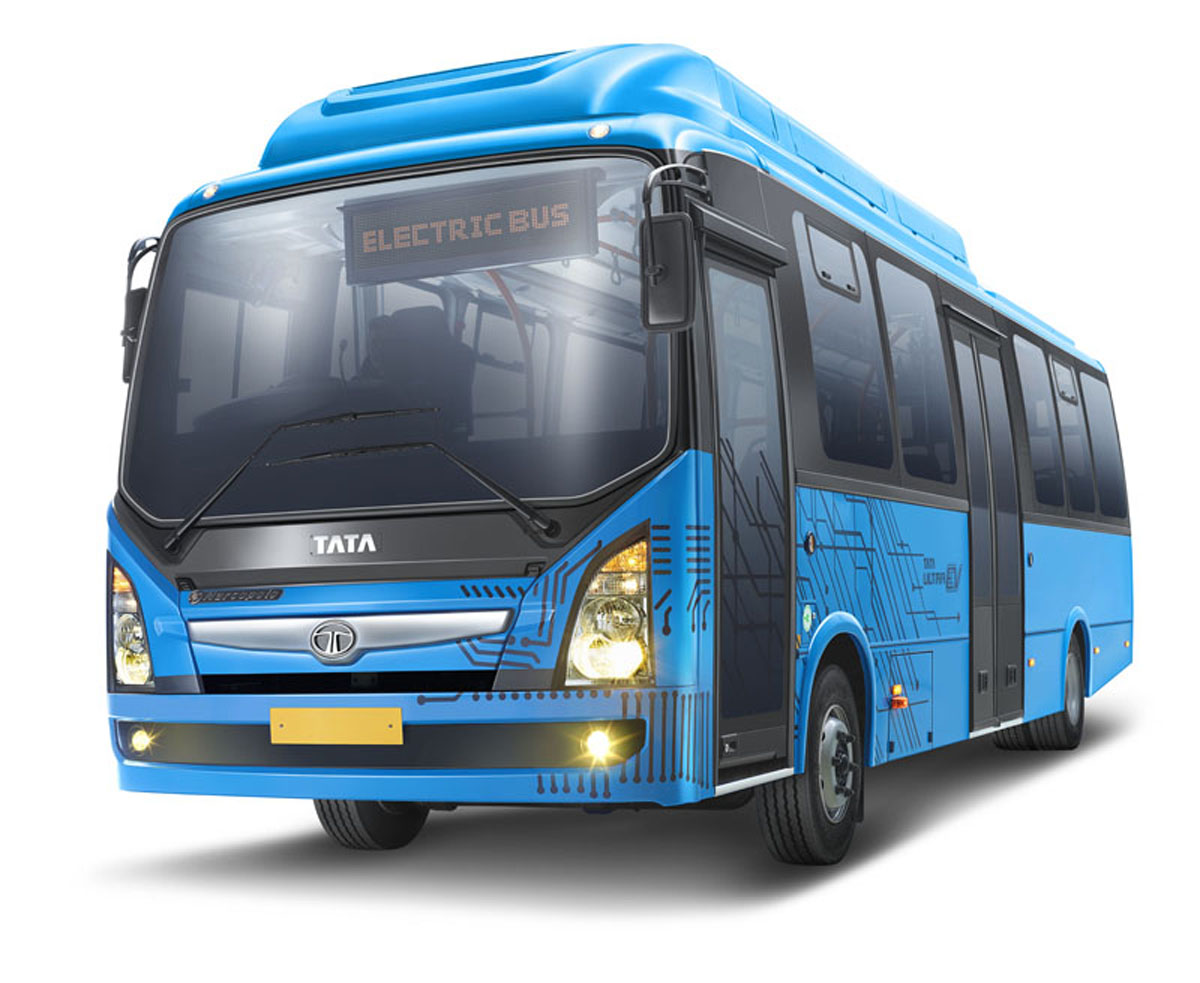
National October 28, 2025: Convergence Energy Services Limited (CESL), supported by The World Bank, World Resources Institute (WRI), UITP, and various Government of India bodies, has documented the successful outcomes and key lessons from ‘India’s Grand Challenge for Electric Bus Deployment’, the largest and most extensive tender globally to date for procuring electric buses.
This initiative is a crucial step for India, which is working toward its NDC (Nationally Determined Contributions) and Net Zero goals, recognizing that the road transport sector holds a prominent share in the country’s GDP. By 2030, India will require over 1 lakh (100,000) electric buses, which is 100 times the number currently in operation, creating a valuable opportunity to transition public transportation technology.
The findings from India’s Grand Challenge for Electric Bus Deployment will guide future policies and initiatives in the electric vehicle sector.
Key Achievements and Cost Savings
Understanding India’s Grand Challenge for Electric Bus Deployment
The recently concluded bidding process, which aggregated demand across cities, has significantly changed the electric bus landscape in India.
- Lowest Prices Ever: The prices discovered through the Grand Challenge (GC) were the lowest ever recorded.
- Massive Savings: The GC successfully concluded the bidding for services of 5,450 electric buses across five cities (Delhi, Kolkata, Bangalore, Hyderabad, and Surat).
- Cost Parity Achieved: Electric buses have now become the de-facto first choice for Indian cities due to their significantly lower costs and reduced lifecycle costs.
◦ Without subsidy: Prices discovered were 23–27% lower than the current cost per kilometre of diesel/CNG buses in these cities.
◦ With central government subsidy (FAME II): Prices achieved are 31 to 35% lesser than current diesel/CNG costs.
- Outperforming Previous Tenders: Compared to the contracted prices under Phase-I of the FAME II program 18 months prior, the GC prices were lower by 28% (Surat) to 52% (Kolkata). This is projected to yield savings of more than INR 10,800 Cr over the 12-year contract tenures.
The Strategy: Aggregation and Enhanced Contract Bankability
CESL, leveraging its experience in large-scale aggregated procurements, acted as a key enabler by assessing scalable solutions for quick adoption and deployment of e-buses.
- Demand Aggregation and Standardization: The GC aimed to deploy buses concentrated in metropolitan cities with well-functioning bus systems.
- The process aggregated demand across cities and homogenised procurement specifications. This collaborative approach, which included inputs from State Transport Undertakings (STUs) through the procurement advisory group, reduced uncertainty risks for bidders and enabled economies of scale.
- Specifications were highly detailed and comprehensive, vetted and approved by ARAI (Automotive Research Association of India).
- Mobility-as-a-Service (GCC Model): The procurement was based on a Gross Cost Contract (GCC), or Operational Expenditure (OPEX) model, where the private service provider handles the investment, operation, and maintenance of the bus and charging infrastructure for the contract tenure.
- This model transfers the financial, operational, and technology risks to the service providers, allowing cities to focus on service delivery.
- The contract tenure was set at 10 years fixed, extendable up to 12 years, deemed optimal to extract the complete value of investments and ensure two full battery life cycles, thus contributing to lower GCC rates.
- Improving Contract Bankability: The GC incorporated critical improvements to the Model Concession Agreement (MCA) based on lessons learned from FAME-II Phase-1, significantly de-risking the contracts for operators and financing entities.
- Revised Payment Terms: Payment is now allowed for unutilized kilometers (75% of fixed cost) and excess kilometers (50% of per-km cost), reducing risks for operators.
- Fixed Escalation: A fixed annual escalation of 2% was proposed, providing better interest coverage than the previous variable formulas linked to CPI-IW and WPI.
- Capped Penalties: Penalties for non-adherence to Service Level Agreements (SLAs) were capped at 10% of monthly payments (5% for operational and 5% for technical failures).
- Operational Readiness: The GC mandated increased range specifications (e.g., 225 km per day) and clarified city responsibilities regarding depot land availability and electricity infrastructure readiness.
Key Lessons for the Future Scale-Up
The results indicate an inflection point for India’s electric bus journey, solidifying the purchase of e-bus services as the most cost-effective approach.
- Aggregation is Beneficial: The GC demonstrated the value of demand aggregation across cities and states, providing a scalable and replicable template for future procurement efforts.
- National Governance Framework: Future aggregation efforts benefit greatly from a National-level intermediary like CESL, which ensures transparency and efficiency through robust financial management compliant with Government of India norms (GFR 2017 and CVC).
- Addressing Complexity: While cost-effectiveness is established, scaling up e-bus services requires substantial capacity building for STUs to plan, monitor service delivery (considering range/charge specificity), manage large contracts effectively, and prepare power grid connections.
- De-risking Financing: To further unlock commercial financing, particularly for cities with weaker financial standing, the sources suggest that a National level Payment Security Mechanism (PSM)—similar to measures adopted for solar energy—could be established to guarantee timely payments to operators