

DELHI/DUBAI, 13th August 2025:When Indian electric vehicle manufacturer Omega Seiki Mobility (OSM) decided it was time to expand beyond its home market, it did not consider Southeast Asia, Europe, or even the United States. Instead, it focused on a sun-kissed stretch of the Persian Gulf known as the Jebel Ali Free Zone (Jafza) on the outskirts of Dubai.
OSM will invest $25 million in this connected logistics enclave over the next five years to build its first overseas electric vehicle assembly facility. The 42,000-square-foot facility, the first of its kind in Jafza, is scheduled to start producing the company’s signature electric two- and three-wheelers in late 2025. It will also function as a storage and distribution centre for components and spare parts.

For OSM’s founder and chairman, Uday Narang, this move is about more than just geography; it’s about transitioning from a fast-growing but mostly domestic Indian company to a regional and eventually global brand. Narang describes Dubai as “our bridge between India and the rest of the world. We can put wheels on the ground faster here, reach more markets without the friction of distance or tariffs, and tap into an explosive demand.”
Strategic Rationale
The reasoning behind OSM’s investment in Dubai is based on market analysis and trade geography. Jafza is a unique intersection point that connects over 2 billion consumers in the Middle East, Africa, Europe, and Central Asia via sea, air, and road. For a company whose products rely on bulk transport — disassembled kits and components ready for quick assembly — shorter shipping times and avoiding high import duties can mean the difference between winning and losing a bid.

Dubai’s business-friendly environment also plays an important role. Over decades, the city has built an industrial and logistics ecosystem to attract manufacturers with incentives such as 100% foreign ownership within free zones, no import/export duties, and modern infrastructure that is directly connected to major ports and airports.
“Jafza has become a gateway for companies that want to sell across the MENA region without establishing operations in each individual market,” says Abdulla Al Hashmi, COO of Parks & Zones at DP World GCC, the zone’s operator. “With the region’s EV market expected to reach $14.5 billion by 2029, now is the time to set up.”
Why MENA? Why now?
Even though the Middle East and North Africa may be late to the global EV narrative, momentum is rapidly building. Gulf states, led by the UAE and Saudi Arabia, are investing billions of dollars in electrification—not only to achieve net-zero goals, but also to diversify their economies away from oil dependence.
The UAE’s Net Zero by 2050 plan calls for expanding the public EV charging network to more than 10,000 chargers by 2030, up from fewer than 1,000 now. Meanwhile, Saudi Arabia’s Vision 2030 aims to build a domestic EV industry from the ground up, with support from national champions such as Ceer and collaboration with global automakers.

Africa offers a parallel opportunity. Countries like Kenya and Nigeria are looking into EV adoption while also considering compressed natural gas (CNG) as a transitional clean fuel. OSM is aware of this reality and intends to launch CNG-powered models in select markets until EV charging infrastructure matures.
Transportation for the other 90%.
While top brands like Tesla, BYD, and Hyundai make headlines in the Gulf for their sleek sedans and SUVs, OSM focuses on a different segment: last-mile mobility, which includes cargo three-wheelers, passenger rickshaws, and versatile two-wheelers.
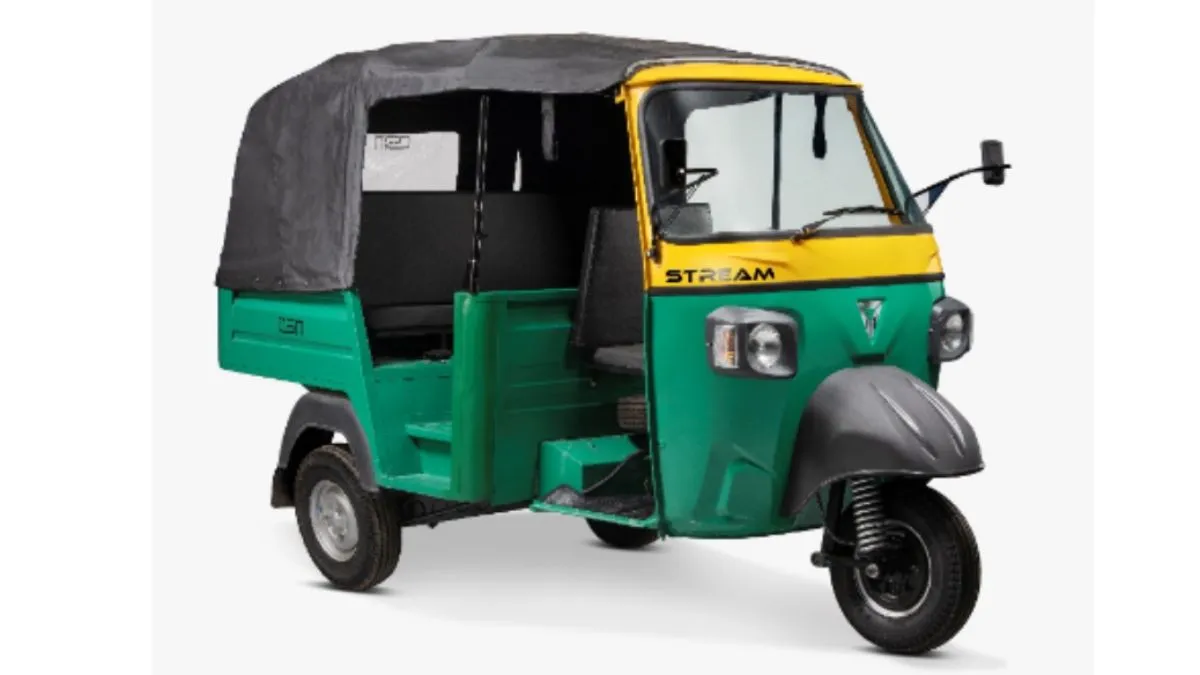
The OSM Rage+, a nimble three-wheeled cargo carrier with battery swapping capability, and the OSM Stream, a passenger autorickshaw with a range of up to 270 kilometres, are designed for fleet operators, e-commerce companies, and micro-entrepreneurs who value cost-per-kilometer over luxury. These products have proven successful in India, where OSM has sold over 20,000 vehicles through a network of 160 dealers, with operational savings often justifying EVs’ higher purchase price.

By assembling kits in Dubai rather than shipping fully assembled units from India, OSM can quickly and affordably adapt specifications—from body design to drivetrain configurations—to meet regional needs.
Competing with Rivals
However, OSM will not be the sole player in the MENA commercial EV market. Chinese brands such as BYD, SAIC, and Foton have aggressively entered the region, often with significant financial backing, established dealer networks, and strong government connections.
OSM’s strategy emphasises cost-effectiveness and adaptability. “Our products are specifically designed for rugged, high-uptime, and low-maintenance operation,” Narang says. “In many African markets, vehicles may travel over 100 kilometres per day on varying road conditions—and we can handle it.”

Localised production in Dubai also allows OSM to avoid regional import duties, which can be as high as 15% in some African countries for fully built units. Furthermore, the company plans to use Gulf-based financing and leasing options to reduce adoption barriers for fleet buyers, similar to its successful strategies in India.
That $25 million factory in the desert marks the tipping point in OSM’s transformation from an Indian EV manufacturer to a global commercial mobility company. Omega Seiki’s investment in Dubai represents the company’s transformational shift, as it departs Indian shores to embrace a global future from a desert launchpad that connects continents and markets ready for the future of clean commercial mobility.