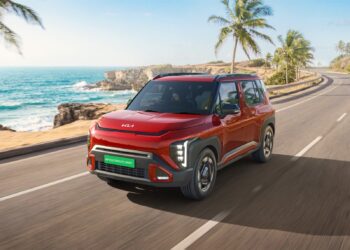


Mumbai, December 23, 2025 – Tata Motors is gearing up for its next big EV push, and the stakes couldn’t be higher. The homegrown automaker, which once commanded more than 70% of the EV segment, plans to invest up to ₹18,000 crore in its EV business by 2030 and roll out new models from the Sierra.ev and a refreshed Punch.ev to its Avinya premium SUVs to maintain a presence across price points.
This strong reaction is in response to competition chipping away more than half of the market within a year, driven by fresh, dedicated EV platforms and inventive ownership models. MG’s Windsor EV, boosted by its battery-as-a-service (BaaS) option, has attracted cost-conscious buyers, while Mahindra’s born-electric BE 6 and XEV 9e SUVs have resonated with urban, tech-forward consumers, leaving Tata Motors with about 45 percent market share
“We aim to offer an electric vehicle at every price point for prospective Indian buyers,” said Shailesh Chandra, Managing Director and CEO of Tata Motors Passenger Vehicles Ltd. “The market is evolving fast, and we are ensuring Tata has an electric vehicle for every buyer, across every segment,” Chandra said
Tata’s initial EV lineup was based on adapted internal-combustion platforms, a strategy that helped it scale early but left it exposed once rivals rolled out ground-up EV architectures.
Doubling Down on Products
Over the next 18 months, Tata plans to launch the Sierra.ev and a refreshed Punch.ev, followed by the Avinya premium SUV range by late 2026. By FY30, the automaker aims to introduce five new EV nameplates, supported by regular model updates and technology refreshes.
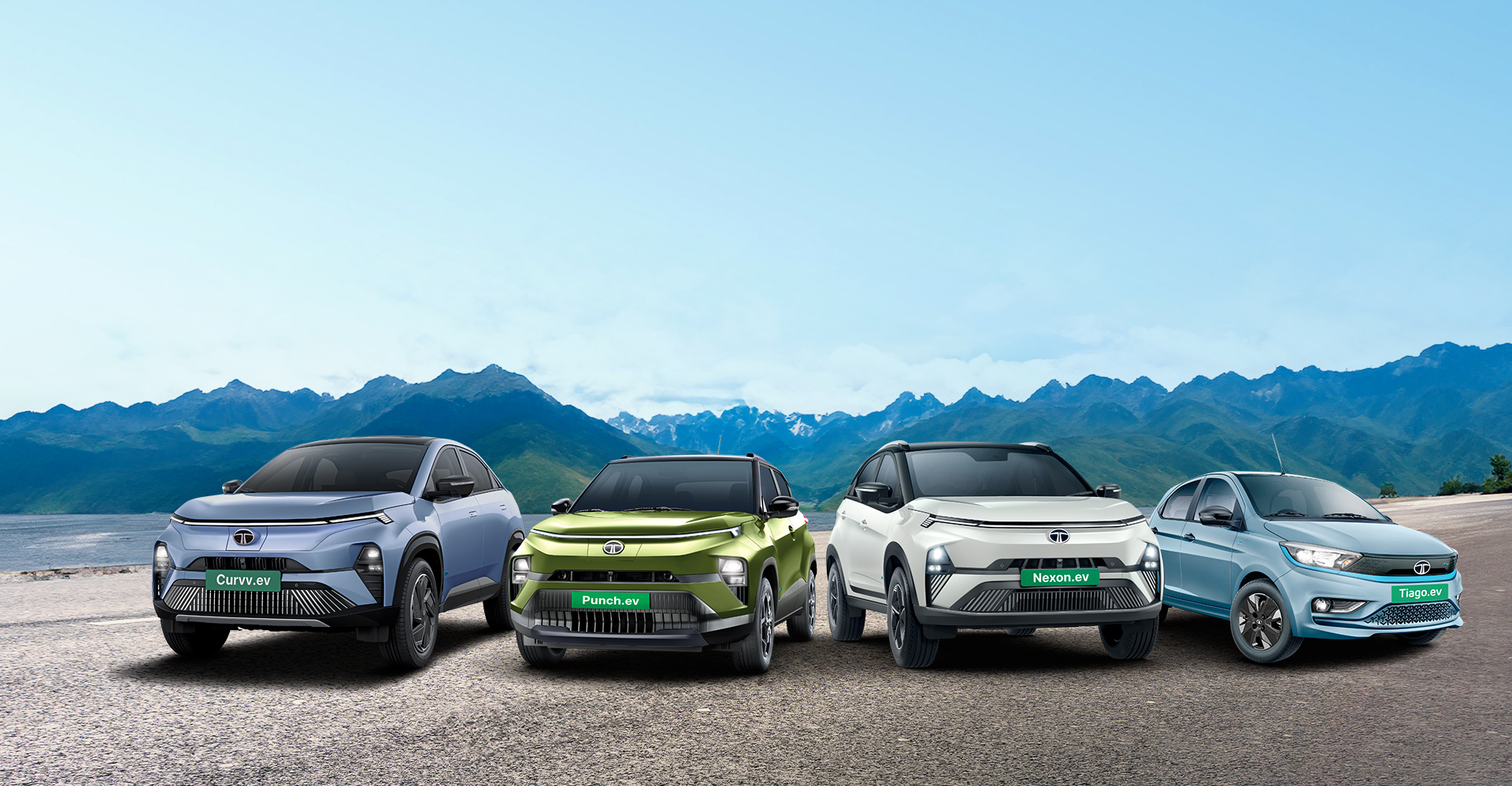
Tata’s current six-model EV portfolio—including the Nexon.ev, Harrier.ev, Tiago.ev, and XPRES-T fleet vehicle covers both mass-market and fleet segments. Since 2020, the company has sold more than 250,000 EVs with the Nexon.ev alone surpassing 100,000 cumulative sales, a first in India’s EV history.
Investments and Charging Infrastructure
The bulk of Tata’s ₹16,000–18,000 crore outlay will fund new EV architectures, product development, and manufacturing capacity. “Crossing 250,000 EV sales reflects how electric mobility is becoming part of everyday Indian life,” Chandra said. “Our customers are driving farther and increasingly trusting EVs as their primary cars.”
Charging infrastructure forms a cornerstone of Tata’s strategy. TATA.ev operates over 200,000 charging points across homes, communities, and public hubs, including more than 100 MegaCharging stations with 120kW+ chargers along highways. By 2030, the network aims to expand to one million charging points, including 100,000 public fast chargers, under an open-collaboration framework.
Building an India-First EV Ecosystem
Localisation is central to Tata’s EV vision. More than 50% of EV content is now domestically manufactured, supported by partnerships in battery packs, power electronics, thermal systems, and battery management. High-voltage components are supplied in collaboration with Tata Group companies, reinforcing a resilient, India-focused supply chain.
“Our EV journey was never about leading alone—it was about enabling India’s transition to clean mobility,” Chandra said. The company also operates India’s largest EV service network, with roughly 1,500 dedicated bays and 5,000 trained technicians, a scale that rivals are still building toward.
Real-World Adoption
Tata.ev owners are increasingly treating their vehicles as primary cars, with 84% using them as main vehicles and driving an average of 20,000 km annually. Over 26,000 customers have surpassed 100,000 km, and about half have completed long-distance trips exceeding 500 km. Collectively, Tata EVs have travelled nearly 12 billion km, saving 1.7 million tonnes of CO₂ and roughly 800 million litres of fuel.
The Road Ahead
Despite losing volume share, Tata’s EV division turned profitable for the first time in five years in 2025, signalling that its margin-focused strategy is taking hold. The real test lies ahead as agile, platform-native competitors scale up production and new entrants enter the market.
For India’s EV trailblazer, the challenge is no longer proving the technology works, it is remaining the default choice as India’s electric mobility revolution accelerates into its next phase.