

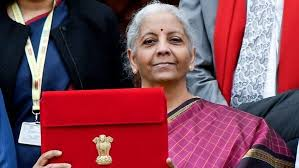
New Delhi, 1st February 2026: India’s Union Budget 2026–27 avoids headline-grabbing subsidies for electric vehicles, opting instead for a quieter but more consequential strategy: rebuilding the automobile industry’s foundations. Presented by Finance Minister Nirmala Sitharaman, the budget doubles down on manufacturing depth, critical minerals, and logistics—choices that industry leaders say could reshape the economics of electric mobility over the next decade, even if showroom prices remain unchanged for now.
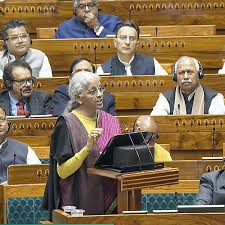 The approach underscores the government’s view of the automobile sector as a primary engine of industrial growth—spanning vehicles, components, electronics, and exports—rather than a consumer discretionary category in need of short-term stimulus.
EV prices hold, policy focus shifts upstream
For buyers, the immediate picture is largely unchanged. The budget offered no reduction in GST or fresh demand incentives for electric vehicles, leaving prices of models such as the Tata Nexon EV steady in the ₹14.5–18.5 lakh range. Import duties of 5–10% on battery raw materials also remain in place, limiting the near-term scope for price cuts.
But policymakers appear to be signalling that the era of subsidy-led EV adoption is giving way to a supply-side playbook—one built around domestic scale, cost control and resilience. That shift aligns with the auto industry’s long-standing demand for predictable policy rather than episodic incentives.
“The Union Budget 2026–27 continues to focus on long-term, sustained economic growth with a strong emphasis on manufacturing and infrastructure,” said Shailesh Chandra, President of the Society of Indian Automobile Manufacturers and Managing Director of Tata Motors Passenger Vehicles. He pointed to the rise in capital expenditure to ₹12.2 lakh crore in FY27 as a lever for demand creation and industrial momentum, including for the automobile sector.
Batteries and minerals move to the centre of strategy
At the heart of the Budget’s EV framework is the continued exemption of Basic Customs Duty on capital goods used for lithium-ion cell manufacturing. The government expanded the exempted list by adding 35 capital goods for EV batteries and 28 for mobile phone batteries, lowering the cost of setting up and scaling factories in India.
The Finance Ministry also fully exempted cobalt powder and waste, lithium-ion battery scrap, lead, zinc and 12 additional critical minerals from customs duties, extending a policy that began with 25 minerals in the July 2024 Budget. The intent is clear: reduce dependence on imported processed materials and insulate manufacturers from global price swings.
Chandra said the extension of concessional duty benefits on lithium-ion cells and parts until March 2028 would help create a “robust EV ecosystem”, improving supply-chain resilience while strengthening India’s export competitiveness.
Rare earth corridors and supply-chain geopolitics
Perhaps the most strategic announcement is the plan to develop rare earth corridors across Odisha, Kerala, Andhra Pradesh and Tamil Nadu. Designed to span mining, processing, research and downstream manufacturing, the corridors are a direct response to recent global disruptions, including China’s tightening grip over rare earth exports.
“The Budget sends a strong signal that India wants to build deep domestic capability across the new industrial value chain—from critical minerals and rare earth magnets to advanced batteries and power electronics,” said Nishant Arya, Vice Chairman of JBM Group. Incentives for mineral processing and duty relief on capital goods, he said, would reduce long-term supply-chain risk and open a significant growth runway for Indian manufacturers.
Public transport, e-buses and pragmatic decarbonisation
The Budget also reinforces electric mobility through public transport. Ms Sitharaman said adoption of electric buses would be encouraged through payment security mechanisms, alongside the deployment of 4,000 e-buses in Purvodaya states. For domestic manufacturers and suppliers, the move offers predictable demand rather than one-off procurement cycles.
At the same time, the government mandated phased blending of compressed biogas in CNG for transport and PNG for households, signalling a technology-agnostic approach to decarbonisation—one that recognises India’s dependence on multiple fuel pathways.
For companies with exposure to electric buses and clean mobility infrastructure, including JBM Group, these measures provide targeted visibility. Arya said the e-bus programme, combined with semiconductor ecosystem development and container manufacturing incentives, would help lift competitiveness and employment across automotive value chains.
MSMEs, components and the export imperative
Beyond vehicle makers, the Budget places renewed emphasis on the auto component ecosystem. A proposed ₹10,000 crore SME Growth Fund aims to provide long-term capital to scalable manufacturers, while expanded use of the Trade Receivables Discounting System is expected to ease working-capital stress. Corporate Mitras in tier-II and tier-III cities are intended to reduce compliance friction for smaller firms.
The Automotive Component Manufacturers Association of India welcomed the measures, calling them critical for navigating global uncertainty. “The sustained focus on MSMEs, clean mobility and export facilitation will help the auto component industry strengthen its global competitiveness,” said ACMA President Vikrampati Singhania, citing customs rationalisation and correction of inverted duty structures as cost-lowering steps.
Logistics as a competitiveness lever
Infrastructure, another pillar of the budget, could have a quieter but material impact on autos and EVs. A proposed dedicated freight corridor between Dankuni and Surat, along with continued investment in railways and inland waterways, aims to cut logistics costs—an often-overlooked factor in the economics of battery-heavy vehicles and exports.
Industry verdict: continuity over populism
Industry leaders broadly described the budget as steady rather than spectacular. Mahindra Group Chief Executive Anish Shah said the proposals strengthen India’s competitiveness by building domestic value chains and reducing critical import dependencies, while the sharp increase in capital spending would help crowd in private investment and support job creation.
From the premium end of the market, Volvo Car India Managing Director Jyoti Malhotra said the emphasis on sustaining growth and simplifying tax and customs processes would support consumption and productivity across the mobility sector.
The budget may not deliver instant gratification for EV buyers. But by anchoring electric mobility within a broader auto-led manufacturing strategy—spanning minerals, batteries, MSMEs and logistics—it reflects a policy wager that scale, resilience and cost discipline will ultimately do more to electrify India’s roads than subsidies ever could.