

New Delhi, January 6, 2026: Data from the Federation of Automobile Dealers Associations (FADA) for the calendar year 2025 shows that while India’s overall auto retail market closed the year on a strong note, the pace and shape of EV adoption remain deeply uneven across segments.
The reasons have less to do with consumer interest and more with on-the-ground economics, financing friction, and inventory risk factors that dealers confront every day.
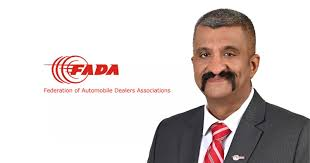
 “Conversions increasingly hinge on timely in-demand stock allocation and faster finance approvals,” said C S Vigneshwar, President and Chairman, FADA, underlining why dealers have emerged as the real gatekeepers of India’s EV adoption curve.
India’s auto dealers have truly emerged as the harbinger of India’s EV transition, unfolding instead inside thousands of auto dealerships, where sales executives, financiers and inventory managers decide quietly but decisively what actually reaches Indian consumers.
Dealers as the real arbiters of EV adoption
India retailed 28.16 million vehicles in CY’25, growing 7.71% year-on-year, according to FADA. But EV penetration within this headline growth varied sharply by category, revealing where dealers are confident—and where they remain cautious.
Three-wheelers offered the clearest signal. EVs accounted for 60.91% of three-wheeler retail sales in CY’25, rising further to 69.12% in December. In contrast, EV penetration stood at 6.31% in two-wheelers, 3.95% in passenger vehicles, and just 1.55% in commercial vehicles.
This divergence is not accidental. Dealers have embraced EVs where the business case is clear, financing is predictable, and customer utilisation is high. Where those conditions weaken, EVs lose out to alternatives, often at the showroom level.
Why three-wheelers cracked the EV code
The three-wheeler segment has quietly become the backbone of India’s EV transition, driven less by environmental consciousness and more by income logic.
For dealers, electric three-wheelers offer a rare combination: minimal operating costs, faster payback periods for owner-drivers, and relatively straightforward financing. These vehicles are typically used for daily passenger or goods movement, making fuel savings immediately visible to buyers.
As a result, dealers have actively stocked, promoted and financed EV three-wheelers—pushing adoption far beyond what top-down policy alone might have achieved. This contrasts sharply with passenger vehicles, where EVs remain a tougher sell.
Passenger EVs: interest meets friction
In passenger vehicles, EV adoption remains constrained despite expanding model options. EVs accounted for just 3.95% of PV retail sales in CY’25, even as overall passenger vehicle volumes grew a robust 9.7%.
Dealers cite familiar friction points: longer financing approval timelines compared with ICE vehicles, lender caution around battery life and resale values, and higher inventory risk in slower-moving variants. For many buyers, the upfront price gap—despite lower running costs—remains difficult to bridge.
That often nudges undecided customers toward alternatives that offer a smoother ownership transition. Those alternatives are now reshaping India’s mobility landscape.
From EV versus ICE to a multi-fuel reality
Rather than a straight-line shift from internal combustion to electric, FADA data shows India settling into a multi-fuel transition, shaped by dealer pragmatism and consumer affordability.
In passenger vehicles during CY’25, petrol models still accounted for 48.5% of sales, but CNG vehicles rose to 21.3%, while hybrids held an 8.2% share. EVs, while growing, remained a niche at under 4%. Commercial vehicles told a similar story, with diesel dominance intact, CNG steadily gaining ground, and EVs still marginal.
This diversified fuel mix reflects how dealers are managing risk—offering customers lower running costs without introducing unfamiliar charging, range or resale concerns. For many buyers, CNG and hybrids are acting as transition technologies rather than endpoints.
CY’25: a turning point year for sentiment
FADA describes 2025 as a “two-half year”. The first eight months were marked by subdued demand, cautious consumers and selective financing. The inflection came from September onwards, when GST 2.0 rate rationalisation lowered prices across key mass segments, including small cars, two-wheelers and three-wheelers.
“The turning point came from September onwards, when GST 2.0 improved affordability and lifted sentiment, leading to a clear upshift through Sept–Dec,” said Vigneshwar.
December proved particularly strong. Total auto retail rose 14.63% year-on-year, aided by year-end offers, inventory liquidation and pre-buying ahead of January price hikes. EV shares improved month-on-month across segments, highlighting how quickly demand can respond when pricing barriers ease.
Rural India reshapes the demand map
Another decisive factor shaping dealer behaviour is rural demand. While EV adoption remains largely urban, rural India emerged as a key growth engine for overall auto sales.
In CY’25, rural passenger vehicle sales grew 12.31%, outpacing 8.08% growth in urban markets. In December alone, rural PV growth surged 32.40% year-on-year, reinforcing the widening spread of personal mobility beyond metros.
Rural buyers, however, remain more price-sensitive and less inclined toward early adoption of new technologies. Dealers in these markets prioritise reliability, serviceability and resale value, tilting preference toward ICE, CNG and entry-level hybrids over EVs.
Dealers’ outlook: optimism, with policy caveats
Despite these complexities, dealer sentiment entering 2026 remains upbeat. FADA’s member survey shows 70.48% of dealers expect growth in January 2026, rising to 74.91% over the January–March quarter, and 77.86% expect growth over the full year.
FADA summed up the mood succinctly: CY’25 closed with stronger demand visibility, healthier enquiry pipelines and a more confident consumer base heading into 2026.
As attention turns to the Union Budget, industry leaders say policy continuity will be critical to sustaining this momentum, especially as EVs and alternative fuels gain share.
“After the successful implementation of GST 2.0, the industry will be looking for policy continuity and long-term clarity,” said Piyush Arora, Managing Director & CEO, Škoda Auto Volkswagen India. “Rationalising the inverted duty structure for EVs will strengthen domestic manufacturing and competitiveness, while sustained support for infrastructure and household disposable incomes will be essential to sustain demand momentum.”
The road ahead
The data suggests no single powertrain will dominate India’s auto market anytime soon. Instead, the transition is becoming layered—EVs growing steadily, three-wheelers leading decisively, and CNG and hybrids playing critical bridging roles.
For policymakers and automakers alike, the message from FADA’s numbers is clear: India’s EV future will not be decided by ambition alone, but by dealer confidence, one financing approval, one inventory call and one customer conversion at a time.